
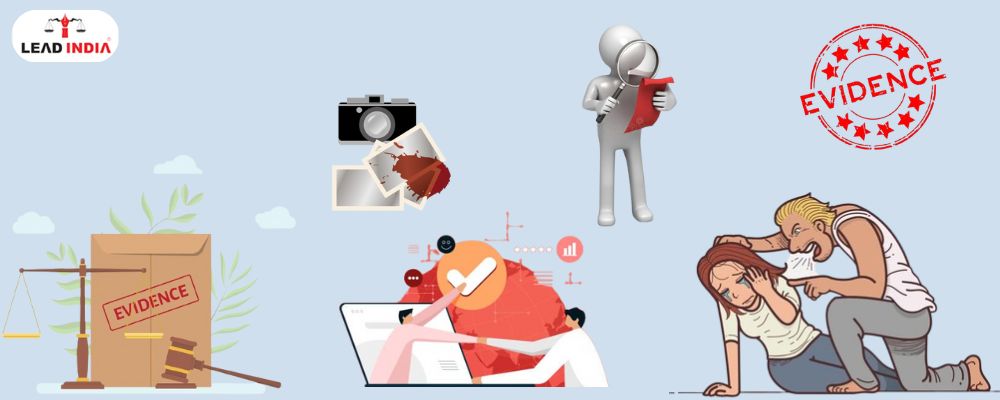
Domestic violence (DV) is a serious social and legal issue in India that often occurs behind closed doors. For victims, proving abuse can be a difficult task, especially when there are no witnesses. This is where photos and videos become essential tools in building a strong case. Whether it is a picture of a mark, a video recording of an abusive incident, or even a voice recording, digital evidence can play a pivotal role in obtaining protection and justice.
However, Indian law has defined the procedures for admitting such evidence in court. The Bhartiya Sakshya Adhiniyam (BSA) 2023, particularly Section 63, outlines the rules for electronic evidence such as photos, videos, or audio recordings.
This article will explain how photos and videos can be used in DV cases, how to ensure their legal admissibility, and what practical steps victims must take to preserve and present this kind of evidence effectively.
Types of Evidence in Domestic Violence Cases
Domestic violence can take many forms: physical, emotional, verbal, financial, and sexual. Consequently, the types of evidence needed to prove it vary:
Physical Evidence
- Injuries (bruises, cuts, burns)
- Damaged belongings (broken furniture, phones, utensils)
- Medical reports or doctor’s certificates
Documentary Evidence
- Police complaints or FIRs
- Reports from social workers or psychologists
- Protection orders or legal notices
Digital Evidence
- Photos of injuries or damage
- Videos of the abuser’s behavior or threats
- Voice recordings of abusive conversations
- Screenshots of threatening messages (WhatsApp, SMS, etc.)
Among these, photos and videos are often the most compelling as they visually capture the abuse and can evoke strong judicial response.
Need A Legal Advice
The internet is not a lawyer and neither are you. Talk to a real lawyer about your legal issue

Legal Framework: Section 63 of the Bhartiya Sakshya Adhiniyam
When it comes to admitting digital evidence such as photos or videos in court, Section 63 of the Bhartiya Sakshya Adhiniyam, 1872 becomes central.
What Is Section 63?
Section 63 provides the legal foundation for the admissibility of electronic records in court.
“Any information stored or recorded on electronic media (CDs, pen drives, mobile phones, cloud storage, etc.) is considered secondary evidence, not primary.”
According to this section:
- Any information stored or recorded on electronic media (CDs, pen drives, mobile phones, cloud storage, etc.) is considered secondary evidence, not primary.
- For such evidence to be admissible, it must be accompanied by a certificate confirming the details of how, where, and by whom the data was recorded.
When Are Photos and Videos Admissible in Court?
To be admissible, photos and videos must meet the following criteria:
- Relevance: The content must directly relate to the DV allegation.
- Authenticity: The photo or video must be original or clearly traceable to its source without being tampered with.
- Proper Certification: Under Section 63(4), a certificate must be submitted along with the evidence, explaining:
- The device used to capture the photo/video
- The method and location of storage
- That the device was in proper working condition
- That the evidence is genuine and unaltered
If these conditions are not met, the court may reject the digital evidence regardless of its potential significance.
Steps to Make Your Photos and Videos Legally Valid
If you’re a victim of domestic violence and want to use digital evidence in court, here’s what you need to do:
Capture Lawfully and Clearly
- Take photos or videos as soon as possible after the incident. Ensure the date and time are visible or embedded in metadata. If possible, include the surroundings to give context to the scene.
Preserve the Evidence
- Do not edit, crop, or alter the file in any way.
- Back up the original file to multiple secure locations (e.g., cloud storage, USB drive).
- Avoid sending the original via social media or messaging apps, as this could compromise its integrity.
Get a Section 63 Certificate
- This certificate should ideally be signed by the person who created or maintained the device from which the evidence is produced.
- It should include details like:
- The nature and format of the file (e.g., MP4, JPEG)
- The device used (e.g., Samsung Galaxy S21)
- How the file was stored and transferred
- A statement affirming the file has not been altered
Present Evidence Properly in Court
- Submit the evidence with the help of a lawyer.
- The lawyer will help ensure the evidence meets procedural and technical standards.
- Keep extra copies (digital and printed) for backup.
Can Secretly Recorded Evidence Be Used?
Many DV victims fear retaliation, so they secretly record abuse. The good news is: secret recordings are not automatically illegal or inadmissible.
In India:
- As long as you are a party to the conversation, secretly recording it is not a violation of law.
- However, the recording must not be doctored or edited.
- You must still produce the Section 63 certificate with the recording.
For example, if a woman records her husband abusing her or making threats, that recording can be accepted as evidence in a DV case, provided the certification is attached.
Importance of Metadata and Device Consistency
Metadata is the hidden technical data that includes:
- Date and time
- Location (if GPS enabled)
- Device information
- File creation/modification history
Why is Metadata Important?
- Helps the court verify that the evidence is authentic.
- Prevents the other party from claiming the file is fabricated or manipulated.
- Strengthens the reliability of your evidence.
So always preserve the original file and use it in court—not screenshots or forwarded copies.
Real-Life Scenarios: When Digital Evidence Helped
Photo Evidence of Injury
A woman filed a DV complaint, supported by photos of visible bruises and cuts. Her injuries were documented alongside a medical report.
Video Recording of Abuse
In another case, a woman submitted a video of her husband verbally abusing and threatening her. The video, taken on her phone, was accepted in court after submission of the 63 certificate. It became central to securing a restraining order and child custody rights.
Do’s and Don’ts for Victims
Do’s
- Always save original files
- Keep a record of when and how you captured the evidence
- Get a lawyer’s help for filing the 63 certificate
- Seek medical attention immediately and request a report
- Keep electronic devices (phones, memory cards) secure and unshared
Don’ts
- Don’t edit or alter the media
- Don’t delay too long in filing the complaint or presenting the evidence
- Don’t use third-party apps that compress or change file formats
- Don’t rely on forwarded media — always use original
What If You Don’t Have the Certificate?
Without a Section 63 certificate, your digital evidence may be inadmissible. However, courts have sometimes allowed exceptions in situations where:
- The original device is available for examination
- The recording is part of a government agency investigation
- The situation demands urgent judicial protection
Still, relying on exceptions is risky. It’s always best to comply with legal requirements from the start.
Why Legal Guidance Is Essential
Navigating the legal system while dealing with the trauma of abuse can be overwhelming. A lawyer can help you:
- Collect evidence lawfully
- Prepare the 63 certificate correctly
- File the complaint under appropriate sections (DV Act, IPC)
- Represent you in court confidently
Many legal aid organizations and women’s commissions also offer free legal help to survivors of domestic violence.
Conclusion
In the digital age, photos and videos can become your strongest allies in a domestic violence case, if handled correctly. The Bhartiya Sakshya Adhiniyam, through Section 63, has established a clear legal framework for victims to present electronic evidence in court. But technical compliance is non-negotiable.
Victims must ensure that their evidence is genuine, unedited, and properly certified. With legal guidance and emotional support, they can present compelling evidence to the court, seek protection, and begin rebuilding their lives with dignity and justice.
One can talk to a lawyer from Lead India for any kind of legal support. In India, free legal advice online can be obtained at Lead India. Along with receiving free legal advice online, one can also ask questions to the experts online free through Lead India.
FAQs
1. Can I use photos as evidence without a lawyer?
Yes, but it’s advisable to consult a lawyer to ensure all legal formalities (especially the Section 63 certificate) are fulfilled.
2. Will a selfie of an injury be accepted in court?
Yes, if it’s unaltered, clearly shows the injury, and is accompanied by the required certification.
3. Can I use audio recordings too?
Yes. Audio evidence is also covered under Section 63 and can be submitted with the proper certification.
4. What if the abuser deletes the video from my phone?
Backups are essential. Always store the original file in a secure cloud service or external device. Also, inform your lawyer and the police immediately.


 Talk to a Lawyer