
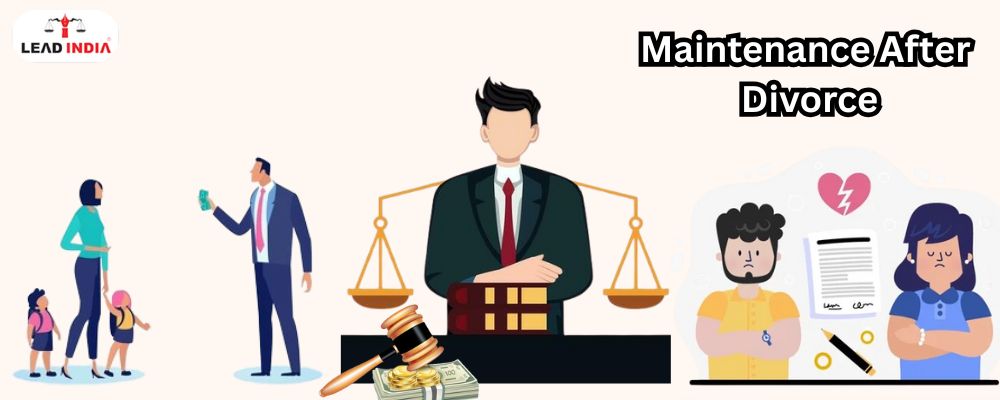
The Hindu Marriage Act of 1955, the Special Marriage Act of 1954, and Bhartiya Nagrik Suraksha Sanhita, 2023 are the laws which regulate the maintenance of India. Both men and women have the right to get maintenance which is also known as alimony. Even working women have equal rights to maintenance if they are unable to support themselves financially.
This blog will explore the legal rights of working women in respect to their maintenance after divorce and the factors which influence the amount of maintenance , and the relevant provisions under Indian law.
Legal Provisions for Maintenance After Divorce
Indian law recognizes that both spouses have an obligation to provide financial support during the marriage and even after divorce, depending on various factors. The provisions for maintenance after divorce are outlined under:
Key Legal Provisions
- Section 24, HMA (Interim Maintenance): According to this section, during the ongoing divorce proceedings any of the parties can seek temporary financial assistance.
- Section 25, HMA (Permanent Maintenance): According to this section, after divorce the courts may order to grant a lump sum or periodic maintenance by considering some factors like earning ability, age, and health.
- Section 36, SMA: Applies identical principles to interfaith marriages.
- Section 125 CrPC / Section 144 BNSS Act: A working woman can obtain maintenance if she lacks sufficient means—even if the husband is unemployed.
Need A Legal Advice
The internet is not a lawyer and neither are you. Talk to a real lawyer about your legal issue
Factors Considered for Maintenance
When determining the amount of maintenance after divorce, the following factors are taken into consideration by the court:
Financial Status
- The court looks at the income, earning capacity, and financial resources of both parties. A working woman may be entitled to maintenance if her income is insufficient to cover her basic needs.
Standard of Living
- The court evaluates the couple’s standard of living during their marriage. If the wife is accustomed to a certain lifestyle but has the financial resources to maintain it after divorce, she may be granted maintenance to ensure a comparable standard of living.
Age and Health
- The court duly considers the age and health of the spouse seeking maintenance. Accordingly, even if the woman is employed, she may still be entitled to maintenance if she is elderly, suffering from an illness, or living with a disability that hinders her ability to earn a sufficient livelihood.
Child Custody
- If the wife has custody of the children, the court may consider the financial duties of raising them and award further financial assistance to the custodial husband.
Employment Status
- A working woman is not automatically disqualified from receiving maintenance. The court evaluates her employment status and earning capacity. If she earns significantly less than her former spouse or faces difficulties in securing suitable employment, maintenance may still be granted.
Procedure for Claiming Maintenance
The procedure to claim maintenance is as follows:
Filing a Petition
- If a spouse wants to seek maintenance, they need to file a petition in the right family or criminal court, depending on the law that applies to their situation. In the petition, they should mention their financial condition and explain why they need financial support.
Interim Maintenance
- While the divorce proceedings are still going on, the court can grant interim maintenance to help support the spouse who is in financial need during this period. It’s meant to ensure that they’re not left struggling while the legal process is still underway.
Permanent Maintenance
- Once the divorce is finalized, the court may order permanent maintenance. This decision is made after carefully looking at both partners’ financial situations and the standard of living they were used to during the marriage.The goal is to make sure the financially weaker spouse can maintain a fair quality of life after separation.
Modification of Maintenance
- Maintenance orders can be modified or terminated if there is a significant change in circumstances, such as remarriage, employment, or changes in financial status.
Benefits of Maintenance After Divorce
- Ensures the spouse can meet basic living expenses after divorce.
- Helps working women sustain the lifestyle they had during the marriage if their income is insufficient.
- Prevents financial dependency or hardship, allowing the spouse to live with self-respect.
- Supports the custodial parent in managing the costs of raising children.
- Acknowledges the spouse’s role in homemaking and caregiving during the marriage.
- Affirms the right to seek support through lawful means, promoting financial justice.
Supreme Court – Maintenance from Second Husband Despite Undissolved First Marriage, 2025
- The woman’s first marriage was not legally dissolved, but she was separated via Memorandum of Understanding (MoU).
- She entered into a second marriage with the full knowledge and consent of the new husband.
- Despite the first marriage being technically valid, the Supreme Court held:
- She was entitled to maintenance from the second husband under Section 125 CrPC (now Section 144 BNSS).
- Emphasis was placed on the social justice intent of maintenance laws to protect women from destitution.
How Can Lead India Help?
At Lead India, we offer expert legal guidance for those seeking maintenance after divorce. Our team of experienced family lawyers can help:
- Draft and file maintenance petitions.
- Guide you through the process of claiming alimony or permanent maintenance.
- Assist with divorce and maintenance cases, ensuring a fair and just outcome based on Indian laws.
Conclusion
In India, a women who is working can still be entitled to maintenance (Alimony) after divorce- it depends on various factors like her income,lifestyle during the marriage, and health condition. The court looks at these aspects before deciding how much maintenance should be given.
To claim maintenance, a woman needs to file a petition in the appropriate court.Since every situation is different, it’s always a good idea to speak with a family lawyer who can guide you through the process and help protect your rights.
Lead India provides expert legal support to make this journey smoother and ensure you get the help you deserve.
One can talk to a lawyer from Lead India for any kind of legal support. In India, free legal advice online can be obtained at Lead India. Along with receiving free legal advice online, one can also ask questions to the experts online free through Lead India.
FAQs
1. Can a working woman still get alimony after divorce in India?
Yes, she can. Even if a woman is working, she has the right to ask for alimony- especially if her income isn’t enough to cover her basic expenses or maintain a standard of living similar to what she had during the marriage.
2. How is alimony decided in India?
The court looks at several things- like the income and earning potential of both spouses, their lifestyle, health conditions, and even who has custody of the children. Based on all these, the judge decides a fair amount.
3. Can the alimony amount change after the divorce?
Yes, alimony can be modified or terminated if there is a significant change in circumstances, such as remarriage or changes in financial status.
4. How long does it usually take to get maintenance?
There’s no fixed timeline – it really depends on how complex the case is and how busy the court is. But generally, it can take a few months to a year for a final decision.


 Talk to a Lawyer