
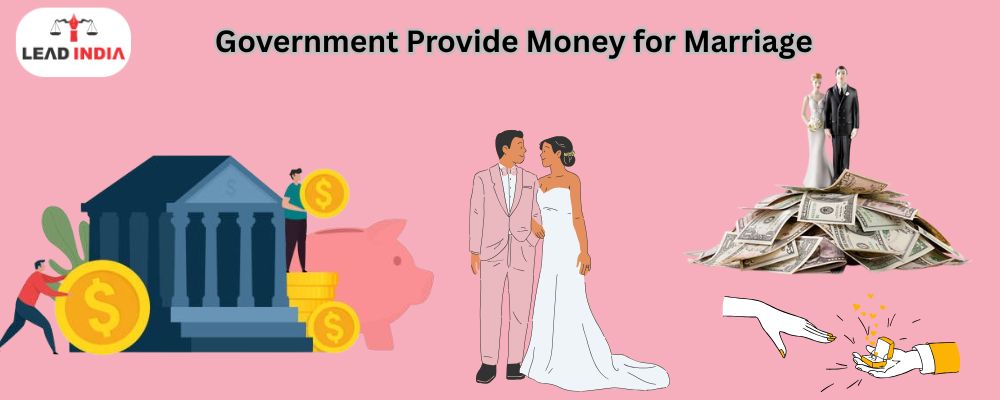
Marriage in India is a grand social and cultural event, it is celebrated like a fesitval with involving substantial expenses. From arranging ceremonies to fulfilling social customs, families especially those from economically weaker sections may face financial strain but somehow families manage the marriage ceremonies.
This raises a common question: Does the Indian government provide financial assistance for marriage?
While there is no blanket central scheme that provides direct marriage funding, various state-specific welfare programs, savings schemes, and empowerment initiatives do offer monetary relief to eligible families, especially those from disadvantaged backgrounds.
In case of inter-caste marriage, the government promotes such marriage to bring equality in society and reduce the inequality in society to erase the difference between lower caste and upper caste discrepancies. The government after marriage provided monetary benefits to inter caste marriage couples in some states.
Understanding these schemes can help families reduce wedding-related expenses legally and smartly.
Need A Legal Advice
The internet is not a lawyer and neither are you. Talk to a real lawyer about your legal issue
Is There a Direct Central Government Scheme for Marriage?
The Central Government of India does not provide direct cash support for marriage under any nationwide law or program. However, it has launched several socio-economic schemes that indirectly ease the financial burden during key life events like marriage. These include:
- Sukanya Samriddhi Yojana (SSY) – it is a long-term savings scheme for a girl child that can be used for marriage and education and an improved girl child ratio in the society.
- PM Jan Dhan Yojana – which provides access to banking, helping women and families receive government transfers securely.
- Pradhan Mantri Awas Yojana (PMAY) – supports housing needs, which can ease financial pressure during marriage planning.
These initiatives reflect the government’s focus on financial empowerment, rather than direct marriage sponsorship.
State Government Schemes That Provide Marriage Assistance
Many state governments in India have recognized the economic challenges of marriage in lower-income families and have created targeted schemes to provide one-time financial support.
Kalyana Lakshmi Scheme (Telangana)
- Beneficiary: Girls from Scheduled Castes, Scheduled Tribes, and minority communities.
- Benefit: ₹1,00,116 is provided as a one-time grant to the bride’s family.
- Condition: Bride must be 18 years or older, and family income must be below the prescribed limit.
Shaadi Mubarak Scheme (Andhra Pradesh)
- Designed for minority Muslim girls.
- Offers financial assistance of ₹1,00,000 to the bride’s family.
- Requires income and age verification.
Mukhya Mantri Kanya Vivah Yojana (Bihar, MP, and others)
- Offers a one-time marriage grant ranging from ₹15,000 to ₹25,000.
- For girls from poor families, SC/ST communities, or BPL households.
These schemes have helped thousands of girls from poor families get married without resorting to high-interest loans or unsafe moneylenders.
Sometime government take initiative to conduct marriage in a group like 100, 500, 1000 of couple getting married in a single day under one roof, which save the money and cost of poor family
Empowerment Schemes for Girls: Savings and Education
The government recognizes that investing in girl children’s education and health can prepare them for life, including marriage. Some notable programs:
Sukanya Samriddhi Yojana
- Parents can open an account for a girl under 10 years of age.
- The account matures after 21 years or at the time of marriage (after 18).
- High interest rate (approx. 8%), with tax benefits.
- Can be used to fund marriage or education expenses legally.
Beti Bachao Beti Padhao
Though not a financial scheme, this campaign encourages education and protection of girls, empowering them socially and economically for future life stages like marriage.
Support for SC/ST and Marginalized Communities
Government schemes for Scheduled Castes (SC), Scheduled Tribes (ST), and Other Backward Classes (OBC) include educational, employment, and sometimes marriage support.
- Dr. Ambedkar Foundation Marriage Scheme: In some states, offers incentives for inter-caste marriages involving SCs.
- Post-Matric Scholarships: Helps families avoid financial distress by supporting education, often freeing up funds that can help during marriage planning.
- Local Panchayat grants: Some panchayats offer support for mass weddings or SC/ST marriages to promote equality.
Tax Benefits and Indirect Financial Relief
While there’s no explicit tax exemption for marriage expenses, some indirect benefits exist:
- Gifts received during marriage are not taxed under Section 56(2) of the Income Tax Act (if from specified relatives).
- Interest on education loans (which reduce financial strain on families during events like marriage) is deductible under Section 80E.
Though limited, these provisions provide some financial breathing room.
Legal Aid for Dowry and Marriage Expenses
If marriage-related financial demands result in dowry harassment or fraud, families can seek free legal aid:
- Under the Legal Services Authorities Act, 1987, eligible persons (including women and SC/ST individuals) can get free legal assistance.
- Women’s helplines, district legal service authorities, and NGOs also step in to support distressed families.
Conclusion
While India’s central government does not give money for marriage directly, various state-run welfare schemes, girl child savings plans, and caste-based initiatives serve to lighten the financial burden but government These programs not only encourage social welfare and empowerment, but also promote financial planning and equality among people and society discourage the misuse of loans or dowry-related exploitation and equality.
It’s essential for families to stay informed about state-specific schemes, maintain proper documentation, and seek legal guidance if marriage-related financial distress turns into legal trouble.
One can talk to lawyers from Lead India for any kind of legal support. In India, free legal advice online can be obtained at Lead India. Along with receiving free legal advice online, one can also ask questions to the experts online free through Lead India.
FAQs
1. Does the government give free money for marriage?
No, but several state-level schemes provide one-time financial support to eligible low-income families.
2. Can I get money under Sukanya Samriddhi for marriage?
Yes, once the girl turns 18, the money can be withdrawn for her marriage or education.
3. What is Telangana’s Kalyana Lakshmi scheme?
It provides ₹1,00,116 to eligible SC/ST/minority brides’ families for marriage expenses.
4. Are there any tax benefits for marriage?
Marriage gifts from relatives are tax-free, and interest paid on education loans (indirectly related) is deductible.
5. Who can help if marriage expenses lead to legal problems?
You can seek help from Legal Services Authorities, NGOs, or lawyers through Lead India for advice and support.


 Talk to a Lawyer