
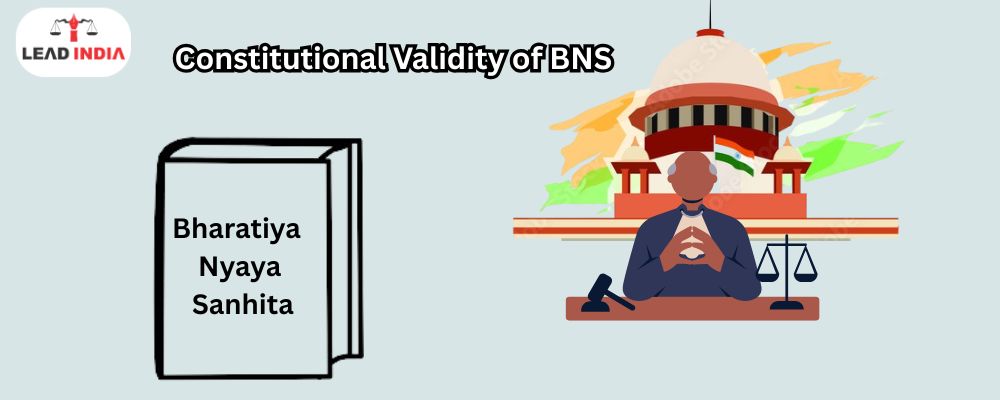
The enactment of the New criminal law by Indian Parliament out of which the Bharatiya Nyay Sanhita, 2023 (BNS) marks a significant overhaul of India’s criminal justice system, aiming to replace the colonial/old Indian Penal Code (IPC) of 1860 which was administered by Brithshers. While the new law promises a modernized approach to criminal law, its constitutional validity is under scrutiny and especially in how it handles the controversial issue of sedition and other major aspects of crime which was not earlier defined under IPC.
This blog explores the transition from IPC Section 124A (sedition) to Section 152 of the BNS, and whether this change truly aligns with the Constitution’s promise of freedom of speech and expression.
Need A Legal Advice
The internet is not a lawyer and neither are you. Talk to a real lawyer about your legal issue
What Has Changed from IPC to BNS?
The BNS retains most core offenses from the IPC but introduces some notable changes:
- Sedition law (Section 124A IPC) is no longer explicitly mentioned.
- Section 152 of BNS replaces it with a broader definition: “Acts endangering the sovereignty, unity, and integrity of India.”
- Community service is introduced as a new form of punishment.
- Organized crime, terrorism, and mob lynching are now codified as standalone offenses.
- Petty organized crimes are also punishable under new provisions.
While many welcomed the removal of the term “sedition”, concerns persist that Section 152 may serve the same purpose under a new name.
The Sedition Law: From Section 124A IPC to Section 152 BNS
Section 124A of IPC
Section 124A criminalized speech or actions that brought “hatred or contempt” or “excited disaffection” against the government. Critics long argued that it was vague, colonial, and misused to silence dissent.
Section 152 of BNS
Section 152 penalizes any act that:
- Endangers the sovereignty, unity, or integrity of India
- Encourages separatist activities
- Supports subversive actions against the State
This provision does not use the word “sedition”, but introduces ambiguous language that critics argue could lead to greater misuse than Section 124A.
Supreme Court’s Position on Sedition
In 2022, the Supreme Court of India ordered a freeze on new FIRs under Section 124A and asked the government to reconsider the law. The government responded by stating that sedition would be repealed with the introduction of BNS.
However, the Court refused to defer hearings on pending petitions challenging the constitutional validity of sedition, stating that the BNS will apply only prospectively. This means that existing sedition cases under Section 124A IPC remain active unless the Court rules otherwise.
Judicial Stand:
- The Supreme Court emphasized that the right to free expression cannot be compromised under vague laws.
- The refusal to delay hearings on sedition is seen as a firm step to uphold constitutional values, regardless of legislative changes.
Law Commission’s Recommendations
The 279th Report of the Law Commission of India advised against repealing the sedition law entirely. It recommended:
- Retaining sedition with stricter safeguards
- Narrowing its scope to prevent misuse
- Increasing judicial scrutiny before registration of FIRs
The government appears to have followed this advice by introducing Section 152, which rebrands sedition without eliminating its spirit.
Why Section 152 Raises Constitutional Concerns
Although presented as a post-colonial reform, Section 152 of the BNS:
- Expands the scope of punishable acts using broad, undefined terms
- Lacks clear safeguards against arbitrary state action
- Has harsher penalties, including life imprisonment or death in mob-related murders based on identity
Legal experts argue that this may violate Articles 19(1)(a) and 21 of the Constitution, which guarantee freedom of speech and personal liberty.
Democratic Implications: Free Speech vs National Security
Balancing national integrity and civil liberties is a constitutional tightrope. While no one disputes the need to penalize terrorism or anti-national violence, Section 152’s vague phrasing could:
- Be misused to stifle dissent, satire, or criticism of the government
- Create chilling effects on journalists, academics, and activists
- Allow police overreach in sensitive political matters
As a result, constitutional validity challenges to this section are likely to intensify.
Case Law & Public Debate
Judicial remarks, PILs, and expert commentaries continue to raise questions:
- In Kedar Nath Singh v. State of Bihar (1962), the Supreme Court upheld sedition but read it down to exclude political dissent.
- In recent cases, the Court has shown clear intent to protect democratic space.
- Civil society groups have demanded a complete repeal of all forms of sedition—regardless of the name.
Conclusion:
A Step Forward or a Masked Step Back?
While the Bharatiya Nyaya Sanhita claims to decolonize Indian criminal law, the introduction of Section 152 may inadvertently replicate the oppressive potential of the very laws it replaces. The debate now centers not just on wording, but on constitutional principles, democratic values, and judicial safeguards.
India stands at a legal crossroads: will it uphold its constitutional promise of liberty, or simply rename old chains with new labels?
One can talk to lawyers from Lead India for any kind of legal support. In India, free legal advice online can be obtained at Lead India. Along with receiving free legal advice online, one can also ask questions to the experts online free through Lead India.
FAQs
1. Has sedition been abolished in India under BNS?
The term “sedition” is removed, but similar offenses are listed under Section 152 of the Bharatiya Nyay Sanhita.
2. Can Section 152 be challenged in court?
Yes. Individuals and civil society groups can file PILs or constitutional challenges if the section is seen to infringe fundamental rights.
3. What is the punishment under Section 152 BNS?
Depending on the nature of the offense, it may include imprisonment for 7 years, life, or even death in some cases.
4. Is the BNS applied retrospectively to past sedition cases?
No. The Supreme Court clarified that BNS applies only going forward. Section 124A IPC will remain applicable to older cases unless quashed.


 Talk to a Lawyer