
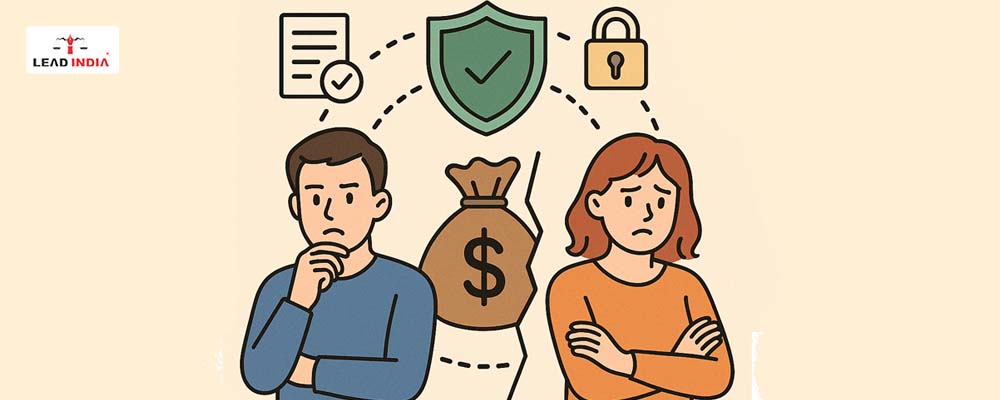
When I was going through my own divorce, I had one big fear, “Will I lose the home I built?” Like many others, I had worked for years to buy property, save money, and build financial security. But the moment divorce entered the picture, everything felt uncertain.
If you’re in the same boat, confused, anxious, and unsure of your rights, this guide is for you to know about asset protection in divorce India.
What the Law Says About Splitting Assets in Indian Divorce?
India doesn’t follow an automatic 50-50 division rule like some Western countries. Here’s how it works:
- Self-Acquired Property: Typically remains with the person who bought or inherited it.
- Joint Property: Assets in both spouses’ names can be contested and divided.
- Stridhan (for women): Jewellery, gifts, and personal assets given to the wife before or during marriage remain solely hers.
- Maintenance vs. Property Division: Courts usually grant maintenance or alimony, not direct ownership in property, unless there are joint investments.
Need A Legal Advice
The internet is not a lawyer and neither are you. Talk to a real lawyer about your legal issue
Relevant Law:
- Hindu Marriage Act, 1955 (Section 25: Maintenance; Section 27: Joint property rights)
- Indian Penal Code, Section 406/ Bhartiya Nyaya Sanhita, Section 316 (2): For recovery of stridhan
What I Did Right: Key Strategies to Protect My Property?
Here’s what I personally learned (sometimes the hard way):
- Keep Every Document, No Matter How Small: I had saved every receipt, home loan statement, and registry paper. This became my strongest weapon in court when I had to prove the house was self-funded.
- Don’t Mix Finances Blindly: If your salary is going into a joint account and your spouse uses it to buy assets, those can be treated as shared. Keep separate accounts. Track everything.
- Avoid Joint Ownership Unless Absolutely Necessary: In my case, I had one property in joint name, though I paid 100%. That created trouble.
If you’re funding something solo, keep it solely in your name. - Preserve Your Stridhan: This especially applies to women. Your stridhan is your right. Make a list, take pictures, and if possible, store it safely outside your in-laws’ home.
What Happens to Joint Property? A Cautionary Tale
I met a man during my case whose wife claimed 50% of the flat they shared even though he paid every EMI.
The court ordered a share because:
- The home was in both names
- He couldn’t prove sole contribution
Case Law:
- K.V. Vinitha vs. K. Arumugham (Madras HC, 2020): Wife’s claim on a jointly held property was rejected due to no proof of contribution.
- Lesson: Keep proof of who paid what. Courts look beyond names; they want financial trails.
Mistakes to Avoid When Divorce is on the Horizon
- Transferring assets suddenly to family or friends can be challenged under the Benami Act.
- hiding assets during divorce India can backfire. Courts may order full disclosure.
- Leaving stridhan at in-laws’ home without documentation makes recovery harder. You may need to file a police complaint under Section 406 IPC/ Section 316 (2) BNS.
Legal Tools That Can Protect You
Here are some important legal provisions that can help safeguard your assets during a divorce:
- Section 27, Hindu Marriage Act, 1955: Helps claim rights over property that was jointly acquired during the marriage.
- Section 406, Indian Penal Code (IPC)/ Section 316 (2), Bhartiya Nyaya Sanhita: Used to recover stridhan or personal belongings wrongfully retained by the spouse or in-laws.
- Section 25, Hindu Marriage Act, 1955: Allows either spouse to claim permanent alimony or financial support after divorce.
- Declaration Suit under Civil Procedure: Helps establish legal ownership over property if there’s a dispute regarding title or possession.
Even if you’re settling the matter outside court, being aware of these tools gives you stronger legal standing and negotiation power.
Final Thought: Don’t Wait Until It’s Too Late
I’ve seen people lose homes, savings, even retirement funds, just because they didn’t act in time.
I was lucky to find a good lawyer and act early. That’s what saved my property.
If you’re seeing cracks in your marriage and are unsure about the future, get legal clarity now. It’s not about mistrust; it’s about protecting your life’s work.
Need Help with Asset Protection During Divorce?
We can help you with Legal Advice for Divorce:
- Pre-divorce legal strategies
- Property ownership disputes
- Stridhan recovery and maintenance cases
Book a confidential consultation with our experienced divorce lawyers today.
One can talk to lawyer from Lead India for any kind of legal support. In India, free legal advice online can be obtained at Lead India. Along with receiving free legal advice online, one can also ask questions to the experts online free through Lead India.
FAQs
1. Can I claim my spouse’s property if it’s in their name but bought during marriage?
You may claim a share only if you can prove direct or indirect contribution (financial or otherwise) in acquiring the property. Courts usually require evidence such as bank transfers, loan repayments, or joint planning.
2. Is ancestral property divided during a divorce?
Generally, ancestral property is not divided between spouses during divorce. However, if the income from such property contributed to the family’s well-being, it may be considered for maintenance calculations.
3. Can the court force me to sell my property during a divorce in India?
Yes, in rare cases where the property is jointly owned and no other arrangement is possible, the court may order the sale of the property and an equitable distribution of proceeds.
4. What if my stridhan is with my in-laws and they refuse to return it?
You can file a complaint under Section 406 IPC for criminal breach of trust. Courts can order police action to recover stridhan if there’s clear proof it belongs to you.
5. Can a wife claim rights in husband’s business or startup?
Only if she can prove financial investment, co-ownership, or involvement in running the business. Otherwise, she may be eligible for maintenance but not business ownership.


 Talk to a Lawyer