
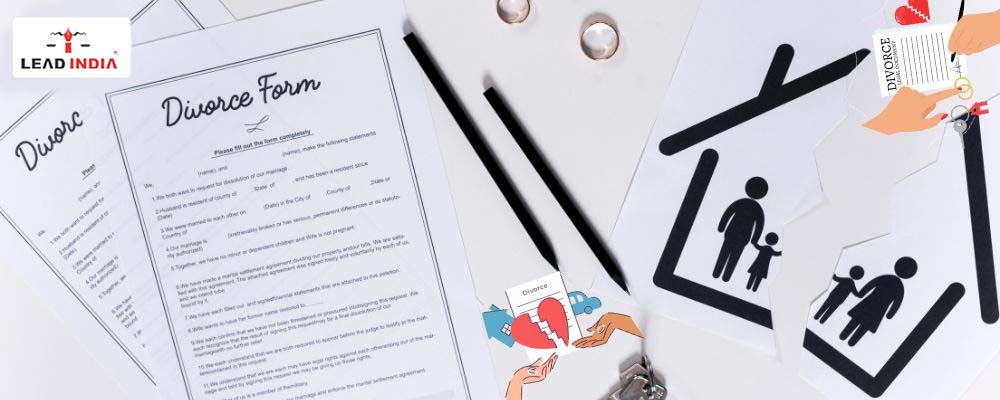
It is not easy going through divorce; however, if partners are willing to separate well, it makes the legal process much less stressful and more efficient. Uncontested divorce in India or mutual consent divorce in India refers to that kind of breakdown when spouses can part peacefully in India. It enables couples to dissolve their marriages without undergoing prolonged court torture: saving money, time, and emotional agony.
Detailed steps, legal requisites, and documentation to be filled along with new court judgments that help ease the procedure are the subject of this write-up explaining how to file for divorce in India.
What Is an Uncontested Divorce and Why More Couples Choose It Today?
When both partners agree to part ways without blame or conflict, that’s an uncontested divorce. Instead of court battles, long delays, and emotional strain, the couple agrees on everything upfront, alimony, child custody, property settlement, and moves forward jointly.
Need A Legal Advice
The internet is not a lawyer and neither are you. Talk to a real lawyer about your legal issue
Which Divorce Law Applies to You? A Quick Breakdown
Depending on your religion and how your marriage was registered, different laws apply:
- Hindus, Buddhists, Jains, Sikhs: Hindu Marriage Act, 1955 – Section 13B
- Interfaith/Civil Marriage: Special Marriage Act, 1954 – Section 28
- Christians: Indian Divorce Act, 1869 – Section 10A
- Parsis: Parsi Marriage and Divorce Act, 1936 – Section 32B
- Muslims: Mutual agreement under Mubarat and Khula/Faskh principles
If you’re not sure which law applies to you, a divorce lawyer can clarify based on your marriage registration.
Before You File: Legal Requirements for Divorce to Check First
From my experience, the process moves smoothly when couples prepare well. These three conditions must be fulfilled before filing:
1. Separation Period:
- One year for Hindus (Hindu Marriage Act)
- Two years for interfaith marriages (Special Marriage Act)
Note: The Supreme Court has allowed the cooling-off period to be waived in exceptional cases.
2. Mutual Agreement on All Terms:
Both parties must fully agree on matters like:
- Alimony or maintenance
- Child custody (if applicable)
- Property or asset division
3. Free and Voluntary Consent:
There should be no coercion, pressure, or fraud involved.
Real Process, Real People: Step-by-Step Guide on How to Get Mutual Divorce in India
This is the exact sequence I walk my clients through in family court:
Step 1: Filing the Joint Petition (First Motion):
The first motion petition is jointly signed and filed by both spouses in the family court. It includes:
- The period of separation
- The joint decision to end the marriage
- Agreements on custody, property, and finances
Case Law: Sureshta Devi v. Om Prakash (1991): Consent must exist at both the time of filing and final hearing.
Step 2: First Court Appearance:
- The judge hears both spouses and verifies that the consent is genuine and the agreement is fair. If satisfied, the court records statements and grants a six-month waiting period.
- Case Law: Nikhil Kumar v. Rupali Kumar (2016): Courts are careful to ensure there’s no pressure or manipulation.
Step 3: The Cooling-Off Period:
- This six-month break allows time to reconsider. But in many cases, I’ve seen clients request a waiver, especially when they’ve been living apart for years already.
- Case Law: Amardeep Singh v. Harveen Kaur (2017): The Supreme Court ruled that the waiting period is not mandatory and may be waived.
Step 4: Second Motion Divorce and Final Decree:
- If both spouses confirm their continued consent, the court proceeds with the second motion divorce. After verifying all facts, the divorce decree is granted, and the marriage ends legally.
- Case Law: Anita Sharma v. Rajesh Sharma (2020): Consent must be reaffirmed at this stage.
What Documents are Required for Mutual Divorce?
Here’s a practical list of what courts usually ask for:
- Marriage certificate
- ID and address proof for both spouses
- Passport-size photographs
- Income documents and asset details
- Written agreement on alimony, child custody, property
- Proof of living separately (rental agreement, address changes, affidavits)
Tip: Always double-check the local court’s specific requirements, some need extra forms.
Can Cooling Off Period be Waived in Divorce?
Yes, courts may waive the six-month waiting period if:
- You’ve already been living apart for a long time
- All terms (custody, alimony, etc.) are agreed upon
- There’s no possibility of reconciliation
From my experience, judges are supportive of waiving the delay when the separation is genuine and settlements are complete.
Why Do Some Mutual Divorce Petitions Get Rejected?
Even in mutual cases, rejections can happen due to:
- One spouse withdrawing consent before the second motion
- Proof of fraud, coercion, or pressure
- Jurisdiction mistakes or incomplete paperwork
Case Reminder: Sureshta Devi v. Om Prakash: Either party can change their mind any time before the final decree.
Why Do Couples Prefer Uncontested Divorce?
- Quicker Resolution: Finalized in as little as six months
- Lower Costs: Minimal legal and court expenses
- Less Conflict: No public accusations or heated court battles
- Privacy Maintained: Proceedings are typically quiet and civil
- Control Over the Process: You decide, not the judge
Final Thoughts: Ending a Marriage Can Be Peaceful and Respectful
Not every divorce has to be a war. If you and your spouse have decided to part ways peacefully, mutual consent divorce is one of the most dignified legal paths available in India. With proper paperwork, clarity, and guidance, it can be done smoothly.
That’s what I’ve seen in the courtroom, when both parties respect the process, the outcome can offer closure and peace. Still, don’t do it alone. Consult a divorce lawyer to protect your rights and make sure every detail is legally sound.
One can talk to lawyers from Lead India for any kind of legal support. In India, free legal advice online can be obtained at Lead India. Along with receiving free legal advice online, one can also ask questions to the experts online free through Lead India.
FAQs
1. If we live together, is it possible for us to apply for a mutual divorce?
Yes. The law requires that the couple be “living separately” emotionally and mentally, even if they share the same physical space. You must show there has been no marital relationship for the required separation period.
2. Is it mandatory to have a written agreement for alimony and custody in mutual divorce?
Yes. A clear, written agreement on alimony, child custody, and property division is essential. The court will review this agreement before granting the divorce decree.
3. Do we need to hire the same lawyer or separate lawyers for mutual divorce?
You can hire either the same lawyer or separate ones. Many couples prefer a single lawyer for filing the joint petition to save time and cost, as long as there’s no conflict of interest.


 Talk to a Lawyer