
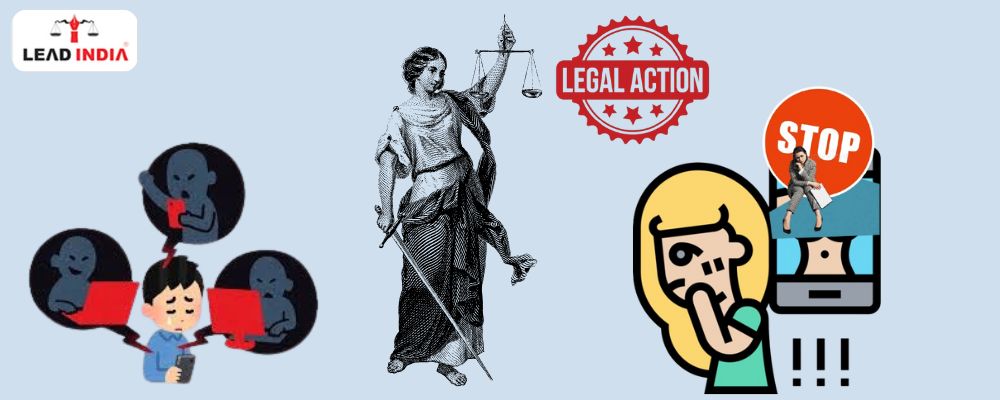
In the present world, these platforms grant connection and convenience but also serve as vantage points for harassment, trolling, defamation, and abuse. If you have encountered social media harassment in India, you are not an isolated case; the law in India provides you with a set of clear remedies so that your dignity, safety, and privacy are protected.
The article covers social media harassment types, the laws that stand up for you, how to register an FIR complaint, and what remedies are on offer.
What Is Considered Social Media Harassment in India?
Social media harassment involves any online activity that produces fear, shame, or distress, such as:
- Vulgar or threatening messages in DMs
- Fake accounts impersonating you
- Sharing your private pictures without consent
- Defamatory posts targeting your reputation
- Repeated stalking through comments or tags
- Obscene memes, jokes, or threats
Need A Legal Advice
The internet is not a lawyer and neither are you. Talk to a real lawyer about your legal issue
Which Indian Laws Protect You Against Online Abuse?
IT Act, 2000: Your Digital Armor
- Section 66C: For identity theft (e.g., fake Instagram profiles)
- Section 66D: For impersonation and online cheating
- Section 67: For publishing obscene images/videos
- Sections 67A and 67B: For sexually explicit content or child abuse material
Note: Section 66A (offensive messages online) was struck down by the Supreme Court in Shreya Singhal vs. Union of India (2015), but despite this unfortunate fact, the same is incorrectly used in FIRs.
IPC/BNS Sections: For Stalking, Defamation and Threats
- Section 354D IPC/Section 78 BNS: Online stalking
- Section 499/500 IPC/Section 356 (1) & (2) BNS: Criminal defamation
- Section 506 IPC/Section 351 (2) BNS: Criminal intimidation
- Section 509 IPC/Section 79 BNS: Insulting a woman’s modesty
- Section 153A/295A IPC/Section 196/299 BNS: Hate speech or religious abuse
Step-by-Step Legal Action on Social Media Harassment
Step 1: Our Client Collected Every Proof He Could
- Took screenshots of messages and threats
- Saved URLs and account handles
- Noted down timestamps and conversations
- Backed them up on Google Drive (in case the abuser deleted them later) “Evidence is everything,”
Step 2: Our Client Reported the Abuse on Instagram and Twitter
All platforms let you report posts and accounts:
- Instagram/Facebook: Tap “Report” on the post or DM
- Twitter: Report tweet or user profile
- YouTube: Report videos or comments
Under the IT Rules 2021, platforms must:
- Appoint a Grievance Officer
- Take action within 72 hours
Step 3: Our Client Filed a Cyber Complaint
You have three options:
- Visit your local police station
- File with the Cyber Crime Cell
- Lodge complaint online: www.cybercrime.gov.in
You’ll need:
- Your ID proof and contact info
- Screenshots and a short write-up
- Any clue about the harasser’s identity (optional)
Pro Tip: Ask for an FIR under IPC/BNS and IT Act sections. If they deny it, don’t stop there.
Step 4: When Police Ignored our Client Went to the Magistrate
The local police didn’t take our client seriously. So, he:
- Filed a private complaint under Section 200 CrPC/Section 223 BNSS
- Approached the High Court under Article 226 for a writ petition
Step 5: Our Client Filed a Civil Suit for Compensation
Beyond the criminal FIR, he asked for damages:
- ₹5 lakh for mental trauma and humiliation
- Court-ordered removal of offensive content
- Injunction to stop further harassment
Use Article 21 of the Constitution: Your right to dignity and privacy.
Women and Children: Even Stronger Legal Protection
For Women Victims
- IPC Sections 354D and 509/BNS Sections 78 and 79 carry serious punishments
- POSH Act applies if workplace platforms like WhatsApp or Slack are used
For Children
- POCSO Act: Covers sexual content targeting minors
- JJ Act: Applies if the accused is under 18
Case Laws on Social Media Harassment
- Shreya Singhal v. Union of India (2015): Section 66A of the IT Act was struck down and the freedom of expression was upheld
- Kalandi Lenka v. State of Odisha (2017): Fake Facebook profiles equal to online stalking
- Manik Taneja v. State of Karnataka (2015): Criticizing public officials doesn’t mean defamation
- S. Khushboo v. Kanniammal (2010): Opinion alone doesn’t amount to criminal harm
- ABC v. UOI (2023): Court ordered removal of revenge porn content and gave immediate relief
What the Government Is Doing?
- Cybercrime.gov.in: Main portal for filing cyber complaints
- Cyber Dost (Twitter handle): Spreads awareness
- CERT-In and Interpol coordination: Allows international cooperation
These exist, but you still need to push the system.
Free Speech Is Not a Free Pass to Abuse
Indian courts say:
- Platforms must protect privacy and dignity
- Free speech doesn’t include threats or obscenity
- Victims should be protected quickly and effectively
Final Thoughts: You Can Fight Back
Having said this, online abuse does feel isolating; you are not powerless. You’re a student trolled on Twitter; a woman harassed on Instagram; you could take action. And you should. The harm may be digital, but there is nothing virtual about your right to be protected against such.
Key Takeaways
- Save screenshots, URLs, and account details
- File a cyber complaint online or offline
- Quote IT Act and IPC/BNS sections in your FIR
- If ignored, approach a Magistrate or High Court
- You can also sue for compensation and take-down orders
One can talk to lawyer from Lead India for any kind of legal support. In India, free legal advice online can be obtained at Lead India. Along with receiving free legal advice online, one can also ask questions to the experts online free through Lead India.
FAQs
1. Can I take legal action if someone shares my edited or morphed images online?
Yes. Sharing morphed images is a serious offense under Section 66E (violation of privacy) and Section 67 of the IT Act. It may also qualify as defamation and cyberstalking under IPC/BNS.
2. Is it mandatory to file a complaint in the city where the harassment occurred?
No. You can file a complaint either in your local police station or cyber cell, regardless of the location of the accused, especially in cybercrime matters.
3. How long do platforms like Instagram or Facebook take to act on abuse reports?
As per IT Rules 2021, platforms must acknowledge within 24 hours and take action (such as takedown or disabling) within 72 hours upon valid complaint submission.


 Talk to a Lawyer