
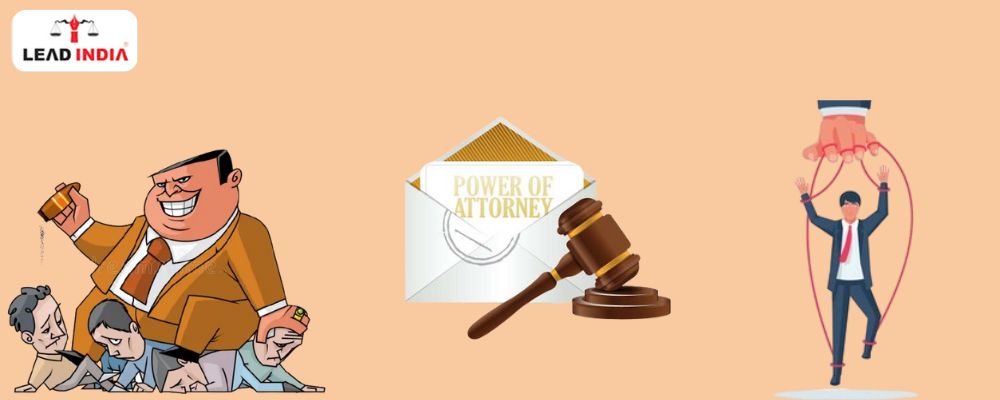
A Power of Attorney (PoA) is a legal document which gives one person (also referred to as the principal) the power to designate another person (also referred to as the agent or attorney) to act on his behalf. Common uses of this include management of financial affairs, property matters, and legal matters, especially when the principal is abroad or incapacitated. The consequences and abuses that occur when such legal authority is abused are disastrous.
In this article, we explain what legal steps you can take in India if a Power of Attorney is misused, covering revocation, civil and criminal remedies, case laws, and preventive measures.
Need A Legal Advice
The internet is not a lawyer and neither are you. Talk to a real lawyer about your legal issue

What Is a Power of Attorney and Why Is It Misused So Often?
A PoA is like handing someone a blank cheque over your life’s assets. You empower someone (the “attorney”) to act on your behalf for property, banking, or legal matters.
There are four common types:
- General PoA: Full access to everything.
- Specific PoA: Permission for one transaction or job.
- Durable PoA: Stays valid even if you fall ill or lose mental capacity.
- Registered PoA: Legally recorded, essential in real estate deals.
From Our Client File: A Delhi-based widow gave PoA to her brother for property management. Months later, she discovered he had sold her ancestral land using a “copy” of the PoA that she never signed.
The 5 Most Common Ways a PoA Is Misused
- Fraudulent Sale: Selling property behind your back.
- Bank Fraud: Withdrawing money or opening fake accounts.
- Overstepping Authority: Acting beyond what you authorized.
- Forgery: Creating a forged or backdated PoA.
- Asset Grab: Using assets for personal gain.
The betrayal is bitter when it is at the hands of those you placed your trust in the lawyer, your relative, your friend, or your business associate.
Step 1: Revoke the Power of Attorney (Immediately)
Revocation of the PoA by law is your primary line of defense:
- Draft a Revocation Deed (on ₹100 stamp paper).
- Register it at the sub-registrar office (if original was registered).
- Send legal notice to the agent and third parties.
- Publish a notice in newspapers.
Case Law: K.K. Bhalla v. DDA, AIR 1995: According to the court, any act done after revocation of PoA is null and void.
Step 2: File a Civil Suit to Cancel the PoA or Restrain Sale
If your property is at risk, or already transferred, file a suit in civil court for:
- Injunction to stop further misuse
- A cancellation in accordance with Section 31 of the Specific Relief Act 1963
- A declaration that the agent’s actions are not authorized
Case Law: Suraj Lamp v. State of Haryana, (2012): It was held by the Supreme Court that sales under PoA are not valid sales unless they are followed by registration of sale deed.
Step 3: File a Police Complaint, It’s Criminal Misconduct
If fraud, forgery, or cheating is involved, it’s a criminal offence. You can file:
- An FIR at the local police station.
- Or a criminal complaint under Section 200 CrPC/Section 223 BNSS.
Relevant IPC/BNS Sections:
- Section 420 IPC/ Section 318 (4) BNS: Cheating
- Section 405 IPC/ Section 316 (1) BNS: Criminal breach of trust
- Section 403 IPC/ Section 314 BNS: Criminal misappropriation
- Section 463 IPC/ Section 336 (1) BNS: Forgery
Case Law: Mohd. Ibrahim v. State of Bihar, 2009: The court upheld that fraudulent execution of PoA for illegal sale is a criminal act.
Step 4: If You’re a Consumer, Go to Consumer Court
If you suffered due to a real estate or service-based scam via PoA (especially in builder or developer dealings), you can approach the Consumer Forum under the Consumer Protection Act, 2019.
Step 5: Knock the High Court’s Door, File a Writ
If a public authority accepted a fake PoA or helped in the fraud, you can file a writ petition under Article 226 for violation of your legal and constitutional rights.
How Do You Prove That Your PoA Was Misused?
To win your case, you must prove:
- You executed a valid PoA.
- The agent acted beyond or against its terms.
- You suffered loss or harm.
- You did not consent to the transactions.
Useful Evidence:
- Registered PoA copy
- Bank or property statements
- Emails or WhatsApp exchanges
- Witness testimonies
Which Court Will Hear Your Case?
| Type of Case | Court to Approach |
| Civil dispute | Civil Court |
| Fraud or cheating | Magistrate or Police |
| Consumer fraud | Consumer Forum |
| Public authority | High Court (Writ) |
How Can You Prevent Power of Attorney Misuse?
Based on real legal cases, here’s what we recommend:
- Always register the PoA, unregistered documents are easy to misuse.
- Limit powers, be specific and time-bound.
- Avoid giving PoA to relatives blindly, trust but verify.
- Add revocation conditions.
- Monitor activity, ask for regular updates and record.
- Prefer joint PoA or multiple signatories for high-value transactions.
Is the Attorney Personally Liable for Misuse?
Yes.
- Civil liability: You can sue them for damages or restitution.
- Criminal liability: They can be arrested or prosecuted under IPC/BNS.
Courts may even allow attachment of property that was transferred using a misused PoA.
NRI Alert: Don’t Leave Your Property Unchecked
NRIs are frequent victims of PoA misuse. In many cases, distant relatives or property dealers use the document to sell or occupy Indian assets.
Case Law: Satya Pal Anand v. State of M.P., 2016: The court emphasized the importance of regular verification and limited powers for NRIs issuing PoA.
Is There a Deadline to Act Legally?
Yes.
- Civil action: Within 3 years from discovery.
- Criminal action: No limitation if the offence is serious and cognizable.
Taking prompt action will help you avoid more losses and improve your case in court.
Are Notaries and Registration Officers Accountable?
Yes. They must:
- Verify both parties’ identity.
- Confirm mental soundness of the principal.
- Record thumb impressions and photographs.
Negligence on their part can lead to administrative or departmental complaints.
Conclusion: Take Back Control with Legal Action
Power of Attorney is a useful tool, but when abused, it can destroy lives. Whether you’re an NRI, a senior citizen, or a businessperson, do not take PoA casually.
What to do next:
- Revoke the PoA immediately if you suspect misuse.
- File both civil and criminal cases as needed.
- Retain documentation and legal notices.
- Consult a property or criminal lawyer without delay.
Legal awareness, timely action, and vigilance are your best defenses.
One can talk to lawyer from Lead India for any kind of legal support. In India, free legal advice online can be obtained at Lead India. Along with receiving free legal advice online, one can also ask questions to the experts online free through Lead India.
FAQs
1. Is an unregistered Power of Attorney legally valid?
For immovable property matters, unregistered PoAs generally carry no legal standing. Only registered PoAs are enforceable under property law.
2. Can I cancel a Power of Attorney without the agent’s consent?
Yes. If you’re of sound mind, you can unilaterally cancel the PoA and notify all concerned parties, even without the agent’s consent.
3. How do I challenge a forged Power of Attorney in court?
File an FIR for forgery and initiate a declaratory suit in civil court to nullify the fake document and reverse any illegal transactions.


 Talk to a Lawyer