
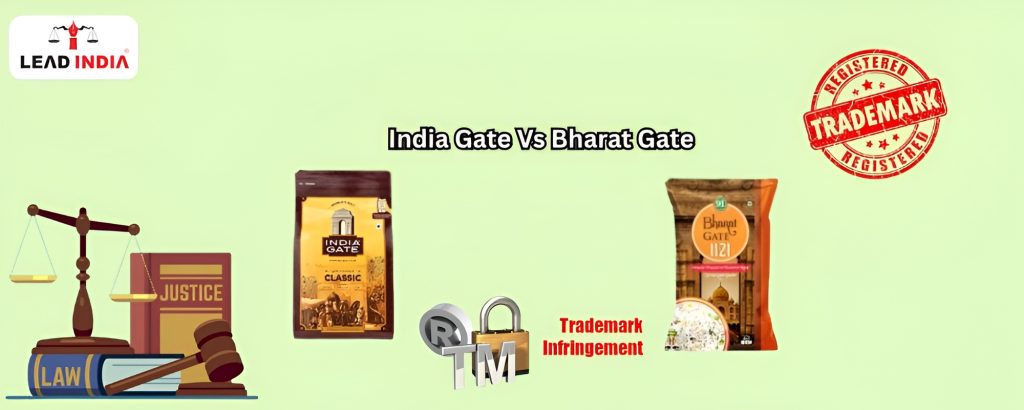
The most important judgment in KRBL Limited v. Praveen Kumar Buyyani & Ors on the day of 15 January 2025 marks a turning point in the jurisprudence of trademark law in India. The case was centred around the flagship brand of basmati rice, India Gate, and a rival brand called Bharat Gate. The issue in the dispute was whether the mark of the rival brand had infringed on the mark of the flagship brand.
The earlier order of the Commercial Court which had permitted Bharat Gate was set aside by a division bench of Justice C Hari Shankar and Justice Ajay Digpaul. Their order has now reinstated the injunction against Bharat Gate, once again prohibiting the use of the implicated mark. The ruling properly puts forward the position of the law and reemphasises the Krishna J espousal in Hindustan Unilever Ltd. v. Nestle India Ltd (2009) that the mark is not just a name but a badge of reputation, consumer goodwill, and a piece of commercial property.
This judgment is particularly important for businesses, startups, and consumers as it clarifies how courts in India evaluate deceptive similarity, acquired distinctiveness, and consumer confusion in trademark disputes.
How the Dispute Started?
Both companies were selling basmati rice. Bharat Gate not only used a name strikingly similar to India Gate, but also placed the India Gate monument image on its packaging.
From experience, many clients initially feel that “adding a small change” (like colour, font, or spelling) makes them safe. But courts look at the overall impression, not the fine print. That’s exactly what happened here: the Court found Bharat Gate’s branding confusing and unfair.
Delhi HC’s Key Findings: Explained Simply
1. Why the Commercial Court Was Wrong
The lower Commercial Court had lifted the injunction on Bharat Gate, saying there were differences in colour and design. But the High Court disagreed, explaining that:
- Consumers rely more on names and dominant images, not on small packaging differences.
- When we argue such cases in court, judges often point out that the ordinary shopper buys on memory, not microscopic comparison.
2. Bharat Gate’s Name Was No Accident
The Court also asked: why choose “Bharat Gate” of all possible names?
- Bharat means India.
- Both marks ended with “Gate.”
- The packaging used the same monument.
In our practice, when no convincing explanation is offered for such choices, courts usually infer deliberate copying. That’s what happened here, the Court concluded Bharat Gate wanted to free-ride on India Gate’s reputation.
Are Common Words Like “India” or “Gate” Protectable?
This is a question we get from clients almost every week: “Can anyone really own a word like India?”
The Court’s answer was clear:
- Yes, “India” and “Gate” are generic on their own.
- But together, “India Gate” had acquired distinctiveness because consumers strongly associate it with basmati rice.
This is what lawyers call secondary meaning a generic term becomes protectable when it gains unique recognition in the market. It is seen this with other famous marks too, once they become household names, the law protects them far more strictly.
What are the Landmark Cases on Trademark Infringement?
The important precedents are as follows:
- Cadila Healthcare (2001, SC): The Courts should focus on the overall likelihood of confusion.
- Renaissance Hotel Holdings (2019, SC): Price differences do not matter; confusion is enough to prove infringement.
- Amritdhara Pharmacy (1963, SC): The marks need to be always judged from the viewpoint of an ordinary or a normal consumer who is thought to have an imperfect recollection.
Lessons for Businesses: Straight from Real Cases
1. Do not Take Shortcuts in case of Branding
Some of the startups sometimes believe that having a famous name helps them to get quick recognition. But as it is seen with Bharat Gate, it has backfired. Instead, you must invest in unique brand development; it’s safer and builds long-term trust.
2. Trademark Search Is Not Optional
The clients are often advised that, before printing a single packet or launching a website, run a trademark search. This small step can save lakhs in future litigation.
3. Goodwill Is an Asset
India Gate spent decades and crores building its reputation. The Court’s ruling shows that the law will protect such investment. For businesses, goodwill should be treated like property you lock and secure.
What does this mean for consumers?
For buyers, this particular ruling ensures that the trademarks remain a trustworthy indicator of the origin.
Imagine standing in a store, looking for India Gate rice. If dozens of similar names popped up, “Bharat Gate,” “Desh Gate,” “Nation Gate”, you could easily be misled. Courts step in to prevent exactly that kind of confusion.
Big Takeaway: Courts Look at the Whole Picture
The Delhi HC reaffirmed that trademarks are judged holistically. Small tweaks don’t save an infringing mark. If it looks, sounds, or feels too close to a famous brand, it’s risky.
In practice, there are clients who lose cases even when they argued, “But the font is different!” The Court’s response is usually the same: the overall impression matters more than details.
Conclusion
The India Gate vs Bharat Gate ruling is more than just a rice-brand dispute. It’s a warning bell for businesses:
- Do not try to build your identity on another’s goodwill.
- Respect the difference between inspiration as well as imitation.
- Treat your trademark as a strategic asset, register it, protect it, and as well as defend it.
For consumers, this ensures that when you pick up a packet with a trusted name, you know exactly what you’re buying.
If you’re a business owner and you are worried about someone copying your brand, or if you’re about to launch any new product, consulting a trademark lawyer early can save you from costly disputes later.
One can talk to a lawyer from Lead India for any kind of legal support. In India, free legal advice online can be obtained at Lead India. Along with receiving free legal advice online, one can also ask questions to the experts online for free through Lead India.
FAQs
1. What is the Triple Identity Test in trademark law?
The Triple Identity Test checks whether the goods, the marks, and the consumer base are the same or similar. If all three match, courts often find infringement.
2. Am I able to trademark generic or common words?
Distinctiveness can be achieved if a word-mark functions as a whole, and there are no other established marks that are similar to the trademark that is being applied for.
3. What is the stance of Indian courts on “intent to copy” in trademark matters?
In many cases, if a similar name or logo is adopted by a competitor, it is presumed that there is an intent to confuse. This helps the brand that wants to protect the mark driven from a region to easily obtain protection.


 Talk to a Lawyer