
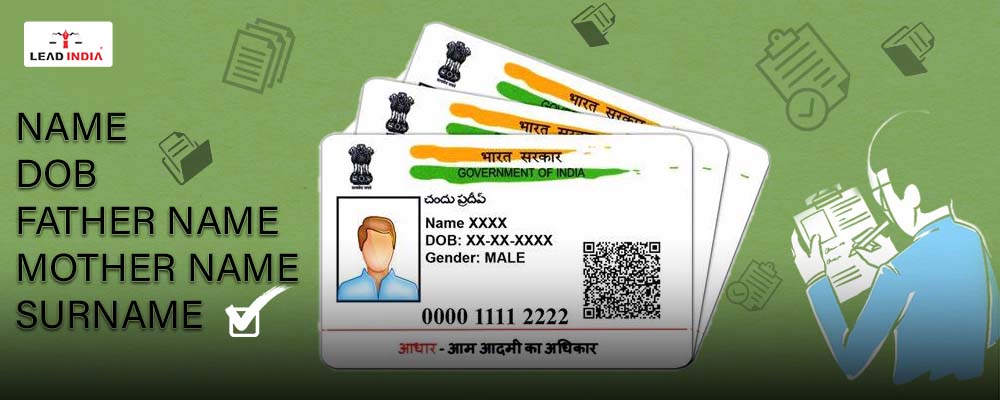
Any mismatch of name or obsolete address on the Aadhaar card may affect availability of pertinent services such as banking or government subsidies. Since the Aadhaar is a primary identification card issued by the Unique Identification Authority of India (UIDAI), its updating is not merely a routine task, but a legally binding obligation.
This guide will help you understand step-by-step how to get legal corrections done either for your name or address with respect to Aadhaar, along with the requisite documents, legal procedures, relevant court rulings, and what steps to take if your request is denied.
Is Aadhaar Mandatory? Here’s What the Law Says
Aadhaar was introduced through the Aadhaar Act 2016. In the landmark judgment of Justice K.S. Puttaswamy (Retd.) v. Union of India (2019) 1 SCC 1, the Supreme Court said Aadhaar is valid but should not be made mandatory for services not backed by law. Still, in real life, Aadhaar is needed for almost everything, PAN, bank, phone, jobs, and subsidies.
Need A Legal Advice
The internet is not a lawyer and neither are you. Talk to a real lawyer about your legal issue
Real-Life Reasons People Need to Correct Aadhaar
Some real examples include:
- Spelling errors in name during enrolment
- Change of name after marriage or divorce
- Shift in address due to relocation or job transfer
- Legal name changes via affidavit and gazette notification
- Mismatch between Aadhaar and other IDs like PAN or passport
Incorrect Aadhaar information can lead to service rejections, financial disruptions, and loss of benefits.
What UIDAI Legally Allows You to Update?
As per UIDAI guidelines, you can update:
- Name
- Address
- Date of Birth
- Gender
- Mobile Number
- Email ID
These can be updated either online through the myAadhaar portal (if your mobile is linked) or offline by visiting an Aadhaar Seva Kendra (ASK).
My Step-by-Step Experience Updating Aadhaar
Step 1: Collecting the Right Documents
For name correction, I used:
- PAN card
- Gazette notification
- Passport
For address correction, I used:
- Utility bill
- Bank passbook
- Rent agreement
Each document was self-attested and scanned clearly. UIDAI is strict about legibility and consistency.
Step 2: Online Update Process
I visited www.aadhaar.uidai.gov.in, logged in with OTP, selected “Update Aadhaar,” uploaded the documents, paid ₹50, and submitted. To keep track of my request, I was given a URN (Update Request Number).
Step 3: Offline Update at Aadhaar Seva Kendra
When I visited the ASK center:
- I filled out the Aadhaar correction form
- Attached photocopies of valid documents
- Verified biometrics (fingerprint/iris)
- Got an acknowledgment slip with my URN
The personnel assisted in verifying my documents, and everything went smoothly.
What If You’ve Legally Changed Your Name?
For changing of names, the UIDAI needs a gazette notification. Here’s what I did:
- Got an affidavit notarized with my name change declaration
- Published the change in a local newspaper
- Applied for publication in the Official Gazette
After receiving the Gazette copy, I uploaded it during the Aadhaar update. This aligns with the legal principle from R. Rajagopal v. State of Tamil Nadu (1994) 6 SCC 632 that name is part of one’s legal identity.
Key Court Cases That Protect Your Right to Update Aadhaar
- Binoy Viswam v. Union of India (2017): Upheld Aadhaar-PAN linking; stressed on the need for correct Aadhaar details
- K.S. Puttaswamy v. Union of India (2019): It confirmed the validity of the Aadhaar, emphasized on data protection and its lawful usage
- Sarika v. UIDAI (2019): Instructed UIDAI to use school records and the gazette to amend the child’s name after the divorce.
- Justice for All v. UIDAI (2020): The court ordered UIDAI to provide appropriate appeal procedures and an explanation for rejections.
What Happens If Your Aadhaar Update Gets Rejected?
Rejections usually happen due to:
- Blurry or mismatched documents
- Missing gazette notification
- Expired or invalid proofs
Here’s what you can do legally:
- File a complaint on the UIDAI grievance portal or at the Seva Kendra
- Approach the Consumer Forum under the Consumer Protection Act 2019
- If your identification or rights are impacted, submit a writ petition in compliance with Article 226 of the Constitution.
In Rekha Sharma v. UIDAI (2021), the Delhi High Court ruled that UIDAI must update Aadhaar if valid proof exists and criticized arbitrary rejections.
Timeline for Aadhaar Updates
- Online correction: 7-10 working days
- Offline update: 10-15 working days:
- Gazette-based changes: 15-30 days (including publication process)
The URN on the UIDAI portal allows you to monitor your current status.
Mistakes to Avoid During the Update Process
- Don’t submit expired or mismatched documents
- Always self-attest your proofs
- Ensure spellings match across all documents
- Keep copies of your acknowledgment and URN safe
Conclusion
In a digital India, your Aadhaar serves as your legal identification. When mine was incorrect, it caused banking delays, verification failures, and legal stress. But once I followed the proper process, using correct documents and legal remedies, it was fixed smoothly.
If your Aadhaar details are outdated or wrong, take action today. Whether you do it online or offline, follow the legal route. And if your request is rejected unfairly, remember that the law is on your side.
One can talk to lawyer from Lead India for any kind of legal support. In India, free legal advice online can be obtained at Lead India. Along with receiving free legal advice online, one can also ask questions to the experts online free through Lead India.
FAQs
1. Can I update Aadhaar details without a mobile number linked to Aadhaar?
No. Online updates require OTP verification on a registered mobile. You have to go to an Aadhaar Seva Kendra to get an offline update if you don’t have it.
2. Can I update my child’s Aadhaar information following a separation or divorce?
Indeed. After a divorce, you must provide a gazette notice or school records proving the child’s legal name. In legitimate circumstances, courts have maintained a parent’s right to update information.
3. What should I do if my Aadhaar update is “Under Review” for a long time?
If it exceeds the normal processing time (10-15 days), contact UIDAI via their grievance portal or visit the Seva Kendra with your URN and documents.


 Talk to a Lawyer