
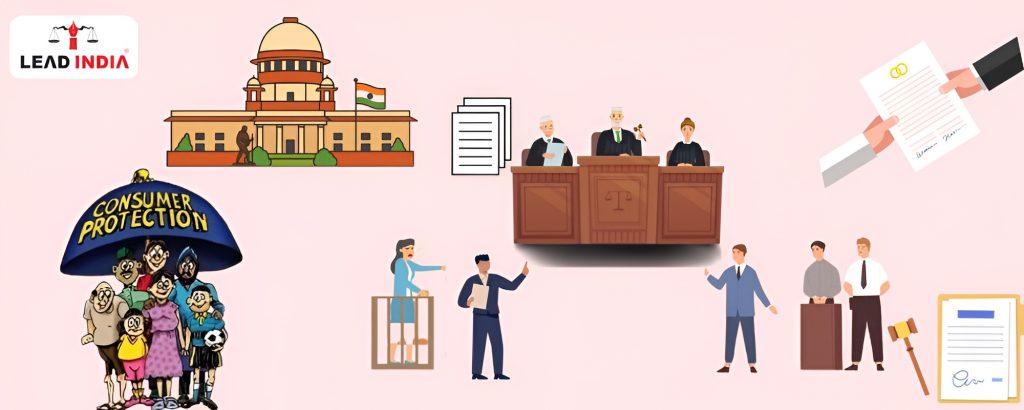
With online shopping, computers providing services, and a modern marketing environment generating bad money, many Indian consumers found themselves paying for counterfeit products, excessive charges, or misrepresentation. If you are put through an unfair ordeal, what are your options? There is a legal remedy for unfairness under the Consumer Protection Act, 2019.
This guide gives stepwise instructions on filing a consumer court complaint along with precedents, best practices, and links to petition electronically.
Who Can File a Consumer Complaint in India?
Whether buying groceries or booking hotels, in case of any complaint, a consumer is eligible for the same rights. Here’s who can file a case:
- An individual who purchased goods or services
- A registered consumer group
- Legal heirs of a deceased consumer
- The Central or State Government
- A group of consumers who are affected by the same incident (class-action)
Case Law: In Kusum Sharma v. Batra Hospital, legal heirs were allowed to recover compensation on behalf of a deceased patient.
What Kind of Problems Can You Complain About?
You can file a case for any of the following:
- Defective product (damaged, malfunctioning)
- Service not delivered (like Rajesh’s washing machine)
- Overcharging or misleading pricing
- Unfair terms or hidden fees
- False ads or exaggerated claims
- Unsafe or hazardous goods
Example: You book a holiday package, but the hotel provided is different from what was promised online. That’s a service deficiency and false advertisement, a valid case.
Which Consumer Court Should You Approach?
Your complaint goes to a specific forum based on how much you paid, not how much you are claiming:
- District Commission: Up to ₹50 lakhs
- State Commission: ₹50 lakhs to ₹2 crores
- National Commission: Above ₹2 crores
Case Law: In Ambrish Kumar Shukla v. Ferrous Infra, the court held that the jurisdiction depends on payment value and not damages claimed.
Step-by-Step: How to File a Case in Consumer Court
Step 1: Send a Legal Notice First
Before filing, send a legal notice to the seller or service provider. It should include:
- Details of the transaction
- Your complaint
- Relief requested (refund, repair, replacement)
Tip: Always obtain proof of delivery and save the notice with a copy.
Step 2: Draft Your Complaint Clearly
It should include:
- Your name, address, and contact information
- Company/party details
- What went wrong
- Relief you’re seeking
- Documents: bills, emails, screenshots, warranty cards
Pro Tip: You don’t need a lawyer. Many people write this themselves.
Step 3: Submit the Complaint (Online or Offline)
Online Filing: Visit www.edaakhil.nic.in – easy, guided process
Offline Filing: Submit the complaint physically to the District, State, or National Commission
Documents You’ll Need:
- Signed complaint copy
- Affidavit verifying facts
- Legal notice copy
- Receipts, invoices
- ID proof
How Much Does It Cost to File a Consumer Complaint?
- Up to ₹5 lakh – ₹200
- ₹5–₹10 lakh – ₹400
- ₹10–₹20 lakh – ₹500
- ₹20–₹50 lakh – ₹1000
- Free Filing: For Below Poverty Line (BPL) complainants (with prior proof)
When Should You File the Complaint?
Time Limit: 2 years from when the incident occurred
Non-adherence to the time limit is excused only on the grounds of a valid excuse, e.g., a patient went to the hospital, then they can explain outside of the timeframe
Case Reference: In SBI vs. B.S. Agricultural Industries, we will calculate the time limit from the date the issue occurred, not when the consumer realized it.
What Happens After You File the Complaint?
Here’s what to expect:
- The court usually issues a notice to the opposite party
- They file a reply
- You both submit evidence
- Hearings occur (either virtually or in-person)
- Finally, a final order is passed (usually within 3-5 months)
- You may also be referred for mediation, which is faster and free
What Kind of Justice Can You Expect?
Depending on your case, the court can:
- Order a refund
- Replace the defective product
- Compensate for mental or financial loss
- Reimburse legal fees
- Impose punitive damages in extreme cases
Example: In IMA v. V. P. Shantha, a court ordered a hospital to pay compensation for medical negligence on behalf of the patient to the deceased’s family member.
Can You Appeal If You Lose the Case?
Yes. Here’s the appeal chain:
- From District Commission → State Commission: within 45 days
- From State Commission → National Commission: within 30 days
- From National Commission → Supreme Court: within 30 days
Landmark Consumer Court Judgments to Inspire You
- LDA v. M.K. Gupta (1994): Govt. authorities are accountable under consumer law.
- Hiranandani Hospital Case (2020): In this case, a 1.25 cr was awarded for negligence related to pregnancy/childbirth.
- Rubi Dutta v. United India Insurance (2011): Insurance companies are not allowed to use financial considerations as grounds to delay settlement ofa claim.
Why You Should Consider Consumer Court Over Civil Suit?
- Low cost
- Fast-track justice
- No lawyer needed
- Simple process
- Online tracking available
Whether it’s a ₹1,000 mixer or a ₹10 lakh car, your rights matter
Conclusion
You too can take action. You don’t need a lawyer, you don’t need to fear court. If you’ve got proof, patience, and persistence, the consumer court can help you get justice.
Start with a simple complaint and end with a powerful resolution. Because in India, the law stands with the honest buyer.
One can talk to a lawyer from Lead India for any kind of legal support. In India, free legal advice online can be obtained at Lead India. Along with receiving free legal advice online, one can also ask questions to the experts online for free through Lead India.
FAQs
1. Do I need to provide a legal notice before filing a consumer complaint?
Even though there is no requirement from the law that provides this need, it is best practice for consumer complaint work to send a legal notice before commencing a consumer complaint to allow a seller or service provider to resolve the issue before receiving a Notice from the Court (it also provides a formal notice that communication has begun).
2. What happens after a consumer complaint is filed?
After filing, the forum sends a notice to the opposite party, who is required to respond. The court can conduct various hearings, examine the evidence, and then pass a final order. Mediation can also be suggested by the court.
3. Can I claim compensation in a consumer case?
Yes, the consumer court can award compensation for financial loss, mental agony, litigation expenses, and even punitive damages in extreme cases.


 Talk to a Lawyer