
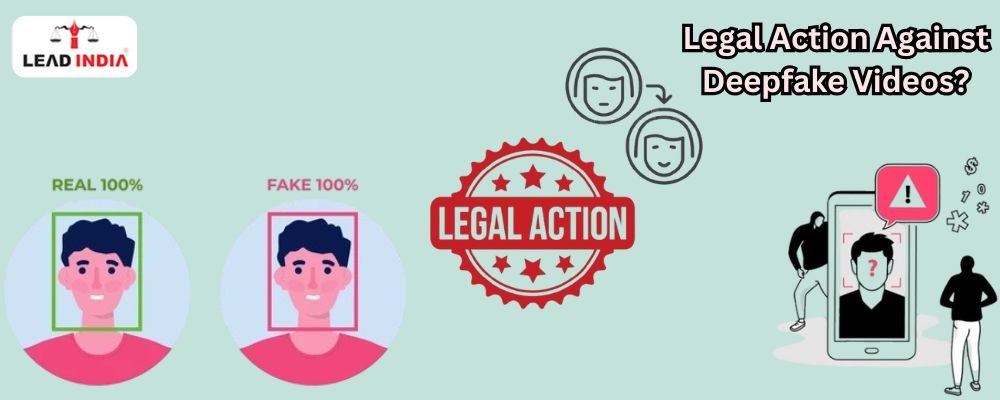
AI has brought tremendous transformations of a creative nature, but also abetted disruptive misuses, of which deepfake videos stand most prominent. Such are artificially created videos or audio clips that appear to be quite real but are in fact completely fake. Many-a-times, they are used to show someone doing or saying things they never did.
With the digital world blooming massive in India, deepfakes pose eerily grave threats to privacy, dignity, democracy, and digital trust. They stain reputations, serve as political propaganda, and harass women; the implications are grave.
The article investigates the manner in which victims in India can fight back deepfakes through the existing legal framework, legal remedies, precedents, and evolving digital policies.
Need A Legal Advice
The internet is not a lawyer and neither are you. Talk to a real lawyer about your legal issue

What is a Deepfake?
Deepfakes are any AI-generated video or audio that makes it appear as if someone is doing or saying something they never really did. It may use one’s face for a porn video or employ one’s voice to issue threats.
They’re dangerous because they’re convincing, and they spread fast.
Laws That Can Help You Fight Deepfakes in India
India may not have a dedicated “Deepfake Law” yet, but you can still get justice using existing laws. Here’s how.
1. Cyber Laws Under the IT Act: Your First Legal Line of Defense
- Section 66E: It deals with breach of privacy through photos or video
- Section 66D: It deals with impersonation using the digital means
- Section 67: For obscene or sexually explicit content
- Section 69A: It deals with offensive content to get removed through government action
These sections are commonly invoked in deepfake FIRs across cybercrime police stations in India.
2. Criminal Laws Under IPC/BNS: When Deepfakes Cross into Crime
The following rules apply when an individual uploads a deepfake with a view to harass, defame, or sexually exploit:
- Section 500 IPC/ Section 356 (2) BNS: Defamation
- Section 509 IPC/ Section 79 BNS: Insult to a woman’s modesty
- Section 354C IPC/Section 77 BNS: Voyeurism involving private images
- Sections 468 & 469 IPC/ Section 336 (3) & 336 (4) BNS: Forgery with intent to harm reputation
Case Example: In a real Delhi case in 2022, a woman’s morphed nude images were used to blackmail her. Police registered FIR under all the above IPC sections and acted within 48 hours.
3. Special Laws That Support Victims
- Indecent Representation of Women (Prohibition) Act of 1986
- The Copyright Act of 1957
- Right to Privacy as per Article 21 of Indian Constitution (Puttaswamy Judgment)
These allow both criminal complaints and civil suits for compensation.
Landmark Cases That Show How Deepfakes Can Be Fought
- Suhas Katti Case (2004): A woman was defamed in an online group. The court convicted the accused as per the IPC as well as IT Act sections.
- Rituparna Chakraborty Case (2021): The Delhi High Court instructed that platforms block the changed photographs while providing the victim with temporary relief.
- Shreya Singhal Case (2015): Landmark decision that upheld your right to get digital content removed, especially under Section 69A IT Act.
Your Action Plan: What to Do If You’re a Victim of a Deepfake?
Let’s break it down from a lawyer’s perspective, this is the actual process we advise clients to follow.
Step 1: Preserve Everything
- Save the video
- Take screenshots of any abusive messages
- Note the URLs, usernames, and platforms
Tip: Even if the content gets deleted later, the proofs that are helps build a solid FIR as well as legal notice.
Step 2: File the Complaint with the Cyber Police
- Visit the cybercrime government portal or your local cyber police station.
- Use IPC/BNS sections: IPC sections 500, 509, 354C, 468, 469/ BNS sections 356 (2), 79, 77, 336 (3), 336 (4).
- Use IT Act sections: 66E, 66D, 67, 69A
Step 3: Send a Legal Notice
Your lawyer can:
- Demand the creator and sharer to take it down
- Ask for a public apology
- Initiate a claim for damages
Step 4: Report to the Platform for Immediate Takedown
Platforms are legally bound under IT Rules, 2021 to:
- Remove nude or sexual content within 24 hours
- Respond to users via a grievance officer
What Works: A clear email with evidence to the grievance officer usually gets quick results, especially with platforms like Meta, YouTube, and X.
Step 5: File a Civil Suit for Compensation
You can file for:
- Loss of reputation
- Emotional trauma
- Invasion of privacy
- Copyright/personality rights (if public figure)
Step 6: Move the High Court or Supreme Court for Urgent Protection If:
- Police don’t act, or
- Your fundamental rights are violated
You can file a Writ Petition under Article 226 or 32.
Challenges That Victims Face and How to Overcome Them?
| Challenge | Solution |
| Deepfake creators hide behind VPNs | Ask police to trace IP logs; platforms are legally required to assist |
| Offenders are abroad | Seek the order for blocking as per Section 69A IT Act |
| Courts take time | Seek interim injunctions or urgent blocking orders |
| People don’t know their rights | Share this guide widely to spread awareness |
What’s Changing: India’s Legal System Is Catching Up
Digital India Act (Coming 2025):
- Will include deepfake-specific rules
- Stronger intermediary liability
- Penalties for AI misuse
AI-Based Detection Tools:
- Startups are working on deepfake detection apps for early flagging.
Stronger IT Rules (2021):
Social media platforms must:
- Appoint grievance officers
- Act within deadlines
- Remove content quickly
Conclusion
Deepfakes have been created by the very technology of artificial intelligence, yet the effects they have brought upon one’s life are real. There are legal rights you have, remedies you can avail, and various entities that can offer help. Do not wait, Preserve evidence, File a complaint, go by the law.
And if you have even the slightest hesitation, consult a cybercrime lawyer at the earliest, as more delay means more damage.
One can talk to lawyer from Lead India for any kind of legal support. In India, free legal advice online can be obtained at Lead India. Along with receiving free legal advice online, one can also ask questions to the experts online free through Lead India.
FAQs
1. Can you sue in civil court for damages caused by a deepfake?
Victims can sue for defamation, mental anguish, damage to reputation, or any type of copyright infringement in civil courts. Awards for compensations are usually based on evidence as well as degree.
2. What if a deepfake is made by someone outside India?
Even if the perpetrator is abroad, under Section 69A of the IT Act, the content can be requested to be blocked by the Indian Government, and aid can be sought in international cybercrime forums.
3. Does one need to consult a lawyer to take action against deepfakes?
Not necessarily so. However, to increase the chances of earlier resolution, especially concerning sending of legal notices and drafts for FIR and court representation, consulting a lawyer in cybercrime, or defamation shall prove useful.


 Talk to a Lawyer