
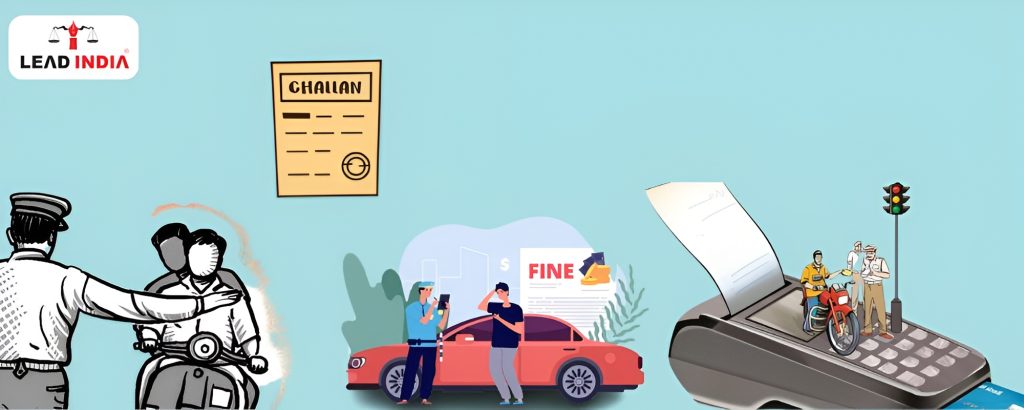
In India, as a norm, traffic fines are issued for contravening rules such as over-speeding, not wearing helmets, and using mobile devices while driving. In accordance with the Motor Vehicles Act, 1988 (MVA), penalty notices are issued either on the spot by traffic officers or through automated systems.
Although penalty notices serve the purpose of order maintenance, they also bring a host of challenges to many, such as incorrectly issued penalty notices due to clerical mistakes, faulty cameras, or lack of sufficient proof. Having an understanding of the laws, the requirements to dispute a penalty notice, and the available solutions is important for all such situations.
This article attempts to provide context on the different challans in India, deciphers the common violations under the Motor Vehicles Act, explains the valid reasons for disputes and the dispute resolution process, mentions the pertinent court rulings and citizen entitlements, and finally, shares the solutions and pragmatic methods to prevent challan related issues.
What is a Traffic Challan?
A traffic challan is a legal penalty notice for breaking road rules. It can be:
- A slip given by a traffic officer
- An SMS from the Parivahan Sewa portal
- An e-challan generated by CCTV
From experience, many people don’t even know they have a challan until they get an SMS alert or try to renew their vehicle insurance.
The Legal Backbone: Motor Vehicles Act Explained Simply
Instead of diving deep into jargon, let’s break down the law in plain language.
| Offence | Section | Fine |
| Driving without license | Sec. 181 | ₹5,000 |
| Overspeeding (LMVs) | Sec. 183 | ₹1,000-₹2,000 |
| Drunken driving | Sec. 185 | ₹10,000 + jail |
| Using mobile while driving | Sec. 184 | ₹5,000 |
Note from Cases: Delhi courts tend to allow compounding in cases of first-time offenders presenting genuine hardship and seeking reduced fines.
Types of Challans You May Face
- Spot Challan: Fine collected on the spot
- Manual Challan: Handwritten slip given by an officer
- E-Challan: Generated through cameras and ANPR technology
- Court Challan: For serious offences such as drunken driving
- Notice Challan: Sent later by post or SMS when the violator is not stopped
One client from Gurgaon was shocked to see three challans online when he hadn’t been stopped by police at all, they were all CCTV-generated e-challans.
Why Do Wrong Challans Happen?
From the practice, most disputes arise because of:
- Wrong number plates entered by cameras
- Old owner getting challan even after selling vehicle
- Challans without supporting photo or video proof
- Officers issuing challans outside their jurisdiction
- Excessive fines beyond what law prescribes
In one case, a client got an e-challan for over speeding when his vehicle was parked at home. We contested it in traffic court with CCTV proof from his building and the challan was cancelled immediately.
Step-by-Step: How to Contest a Wrong Challan
- Check Online First: Verify challan on Parivahan Sewa.
- Collect Evidence: GPS logs, parking slips, dashcam footage.
- Dispute Online: Raise it via traffic portal if it’s an e-challan.
- Appear in Court: For manual challans, present your case before the traffic magistrate.
- Use Lok Adalat: Many challans are settled here with reduced fines.
- File Writ Petition: If police acted arbitrarily such as seizing a vehicle without authority, High Courts can intervene under Article 226.
Pro tip: Always keep your driving license, RC, insurance, and PUC updated in Digilocker. Courts accept digital documents, and it prevents unnecessary challans.
What Do Courts Say About Traffic Fines?
Courts have made it clear that the fines must be strict but not arbitrary.
- Pradeep Kumar v. Union of India (2019): Delhi High Court said e-challans need photo or video proof
- Mukund Dewangan Case (2017): Clarified license categories; challans for wrong license upheld
- Delhi Traffic Courts (from 2019 onwards): Alleviated fines for those with ₹20,000+ challans on poor drivers and a humanitarian view.
Delhi Case Study: ₹23,000 Challan Reduced in Court
When the 2019 Act came in, Delhi drivers received challans worth ₹20,000-₹30,000 for triple-riding and overloading. One of the clients took it to court. The magistrate lowered the fine after the driver’s daily wage worker status was brought to his attention.
Lesson: Yes, the courts do enforce rules, but they do so with an eye toward justice.
Citizens’ Concerns: Are Fines Too Harsh?
- Supporters say high fines reduce accidents
- Critics say penalties hurt the poor more than the rich
- Many people pay blindly without even checking if the challan is genuine
According to MoRTH, road accidents reduced by 8.3% after stricter fines were introduced in 2019. So yes, fines are working, but they also need fairness.
Remedies You Can Use If Challan Is Wrong
- RTI: Ask traffic police for photo or video proof
- Consumer Court: Rare but possible if service is deficient
- Compounding: Pay reduced fine for minor offences
- Appeal: If convicted, move to Sessions Court
- Grievance Helplines: Most states have complaint portals
One client in Lucknow filed an RTI for his e-challan proof. Police failed to provide it, and the challan was dropped in court.
How to Avoid Future Challans?
- Save RC, insurance, PUC, DL in Digilocker
- Install a dashcam, it is useful in disputes
- Regularly check Parivahan portal for unseen challans
- Do not pay cash challans without proper receipt
- Transfer ownership immediately after selling your vehicle
Conclusion
Traffic fines are here to make our roads safer. But when they are wrongly imposed, you must know your rights. As a lawyer, it is seen that:
- A reckless driver who caused an accident deserved the fine
- A wrongly challaned motorist fought back and got justice
The law is clear, drive safe, but don’t pay blindly if you are not at fault. Always check, verify, and contest when necessary.
One can talk to lawyer from Lead India for any kind of legal support. In India, free legal advice online can be obtained at Lead India. Along with receiving free legal advice online, one can also ask questions to the experts online free through Lead India.
FAQs
1. What happens if I sell my car but the new owner gets a challan in my name?
If ownership transfer is not updated in the RTO records, the challan will be in your name. You need to ensure RC transfer when you are selling a vehicle.
2. Can traffic police seize my driving license or vehicle?
Of course. For grave violations such as drunk driving, extreme speeding, or getting into an accident, the traffic police can, under the Motor Vehicles Act, confiscate your driving license or vehicle.
3. Can a challan amount be reduced or waived?
Yes. Courts and Lok Adalats can reduce fines if they are found excessive or if humanitarian grounds are shown.


 Talk to a Lawyer