
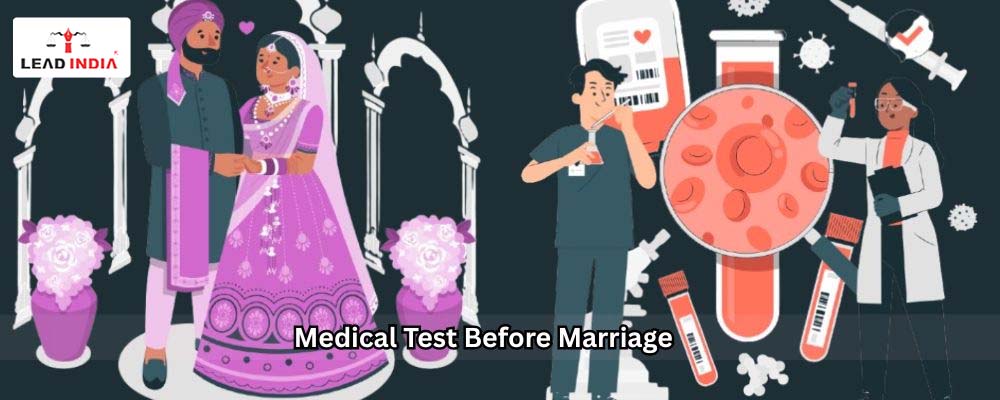
In India, marriage is more than just a legal bond, it’s a deep-rooted social and emotional commitment. But in today’s world, where health conditions like HIV, genetic disorders, and mental illnesses can impact marital life and future children, many couples are asking: Is medical testing mandatory before marriage in India?
The answer thus has to do not merely with law but also with rights and responsibilities, balancing personal privacy with transparency. The article speaks about the legal aspect, the courts’ view of the issue, and what couples should be aware of.
What Indian Laws Say About Health and Marriage?
Marriage in India is governed by individual personal laws according to the particular religion:
- Hindu Marriage Act 1955
- Muslim Personal Law (Shariat) 1937
- Special Marriage Act 1954
- Christian Marriage Act 1872
- Parsi Marriage and Divorce Act 1936
None of these laws legally require a medical test before marriage. However, they do require that both partners:
- Be mentally sound
- Give valid consent
- Not be suffering from a serious mental disorder at the time of marriage
So technically, if someone hides a serious condition, especially one that affects consent, it could make the marriage voidable.
Need A Legal Advice
The internet is not a lawyer and neither are you. Talk to a real lawyer about your legal issue
Is It Mandatory to Get a Medical Test Before Marriage?
No, it’s not legally required in India. But from my experience and research, it is strongly advisable. It becomes even more important when:
- The marriage is inter-faith or being registered under the Special Marriage Act
- Either partner has a known medical history
- You want clarity before building a family or having children
Court Cases That Made Me Rethink Everything
1. Informed Consent Isn’t Optional: Shri Krishna Singh v. Mathura Ahir (1980)
- The Supreme Court emphasized the importance of knowing all material facts before marriage. This includes health history, especially if it may impact marital life.
- This judgment supports the view that disclosing serious medical conditions is a moral and legal duty.
2. The HIV Disclosure Case: Mr. X v. Hospital Z (1999)
- In this case, an HIV-infected man did not divulge his condition to his fiancée. The hospital informed the family. The court sanctioned the disclosure of HIV-status, holding that an absolute right to privacy ceases to exist where another person’s right to life is endangered.
- This case reinforced the need for transparency in health matters before marriage.
3. Mental Illness Was Hidden: Anurag Kumar v. State of Uttarakhand (2016)
- After marriage, the husband discovered that his wife had a serious mental illness which had been deliberately concealed. The court allowed annulment on the ground of fraud.
- It highlighted how non-disclosure of a health condition can lead to serious legal and emotional consequences.
What the Government Has Tried and Why It Failed?
- In 2008, the state government of Maharashtra suggested making HIV testing mandatory for anyone planning to get married. This proposal came under major criticism, accusing it of discrimination, intrusion, and violation of individual rights. Eventually, it was withdrawn.
- The National AIDS Control Organisation (NACO), while favouring free HIV testing and counselling, does not advocate mandatory HIV testing for marriage.
My Take: Pros and Cons of Premarital Medical Testing
Why it Makes Sense?
- It gives peace of mind and starts the marriage with honesty
- Prevents future legal issues arising from concealed conditions
- Helps protect your partner from communicable diseases
- Offers clarity while planning children in case of genetic disorders
From personal experience, getting tested brought mutual comfort and clarity. It wasn’t about fear. It was about respect and openness.
Why People Hesitate for Premarital Medical Testing?
- They fear being judged or rejected
- Some consider it invasive or unromantic
- In conservative families, even suggesting tests feels awkward
- There is a lack of accessible and confidential testing in smaller towns
But a few moments of discomfort are worth the long-term peace it brings.
What Do Other Countries Do?
USA:
- Some states previously mandated premarital blood tests (e.g., for syphilis or rubella)
- Most of these laws have now been repealed due to privacy concerns and medical advances
Iran:
- Mandatory medical tests before marriage
- Commonly includes screening for genetic disorders like thalassemia
- Aimed at preventing hereditary diseases in offspring
China:
- Premarital health checks are recommended or required in certain provinces
- Focuses on preventing transmission of infectious and hereditary diseases
- Practice varies by region and local policy
Many countries moved away from mandatory testing due to privacy concerns, while others still require it for specific diseases.
What About Religion? Do Personal Laws Say Anything?
When I discussed this with both a priest and a maulana, their answers were similar.
- Hindu and Christian traditions do not mandate testing, but encourage transparency
- In Islam, health and fitness for marriage are emphasized, and scholars often recommend medical screening
- Across most faiths, the focus is on honesty and compatibility, not on legal enforcement of medical tests
Here’s What I Recommend to Every Couple
- Make testing voluntary, but normalize the conversation
- Include a health disclosure option in marriage registration forms
- Make pre-marital counselling more holistic, covering emotional and medical readiness
- Build safe, confidential, and affordable testing facilities, especially in Tier 2 and Tier 3 cities
Final Thoughts: Marriage Is Built on Trust and Health Is Part of That Trust
- There’s no law today that says you must get medical tests before marriage in India.
- But after reading judgments, speaking with professionals, and going through the process myself, I genuinely believe that a simple health check can go a long way in building trust and avoiding future pain.
- We decided to go for basic tests, including HIV, thalassemia, and mental health screening. It wasn’t awkward. It was empowering. We felt like we were choosing honesty over assumption.
- Marriage isn’t just a celebration; it’s a commitment to each other’s well-being. And that includes health.
One can talk to lawyer from Lead India for any kind of legal support. In India, free legal advice online can be obtained at Lead India. Along with receiving free legal advice online, one can also ask questions to the experts online free through Lead India.
FAQs
1. Will discovery of a serious illness after marriage result to divorce or annulment?
Such grounds could arise if serious diseases are concealed before marriage. For example, such a ground could be instituted for annulment under Section 12 of the Hindu Marriage Act since it’s been concealing illness, or for divorce on grounds of either fraud or cruelty based on proof on the nature of the disease and evidence of concealment.
2. Is hiding HIV or mental illness before marriage considered fraud under Indian law?
Yes, Indian courts have ruled that hiding life-threatening or serious mental conditions before marriage can amount to fraud, making the marriage voidable. This has been upheld in several judgments including Anurag Kumar v. State of Uttarakhand and Mr. X v. Hospital Z.
3. Are medical tests part of marriage registration under the Special Marriage Act?
No. The Special Marriage Act requires notice, declaration, and age/consent verification but does not require submission of medical test reports.


 Talk to a Lawyer