
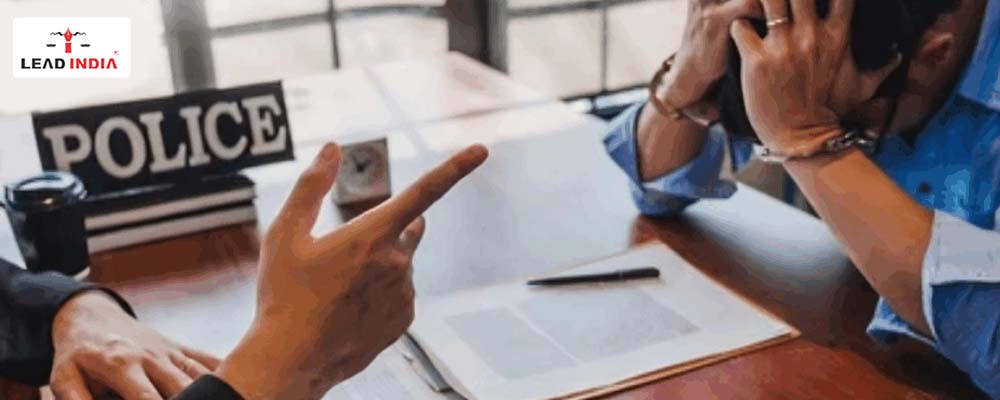
The process of criminal investigation in India grants significant powers to the police. However, this power is not without limits. One common concern that arises in criminal jurisprudence is whether it is lawful for the police to repeatedly summon an individual for questioning, especially when that person is not an accused but merely a witness or someone acquainted with the facts of the case. This article explores the legality of such actions by the police under Indian law, supported by constitutional provisions and case law.
What Are the Police’s Powers to Summon You for Questioning?
In investigating any criminal case, the police in India have been empowered with substantial powers; yet, those powers are not absolute. The Criminal Procedure Code, 1973 (CrPC)/Bhartiya Nagarik Suraksha Sanhita, 2023 (BNSS), have provided rules within which questioning of a police officer is permissible. Therefore, the bill has an examination of when summonses should be issued and when they should be one.
What is Section 160 CrPC/Section 179 BNSS?
- The police can call someone who knows about the case, even if they’re not accused.
- This rule only applies within the police station or its adjacent areas.
- Important: The women and children are not to be summoned in the police station. A female officer will be present when they are questioned at home.
Yes, the police have the right to summon you for questioning, but the manner and frequency of these summons are strictly governed by law.
Need A Legal Advice
The internet is not a lawyer and neither are you. Talk to a real lawyer about your legal issue

What Happens When Police Summons Become Harassment?
If one summons may be considered routine, when frequent and uncomfortable it becomes harassment. Such acts violate your fundamental rights, especially those entitled to you under the Domestic Violence Act:
- You’re not an accused or suspect.
- No formal notice is issued.
- You’re being intimidated or detained for prolonged periods.
The Law is On Your Side: Your Rights Are Protected
- Article 21: Right to life and personal liberty.
- Article 22(1): Protection from arbitrary arrest and detention.
So, if repeated summonses infringe upon your liberty without legal cause, you have every right to challenge them.
Real-Life Legal Precedents: What the Courts Have Said
Indian courts have repeatedly dealt with issues of police overreach and how repeated summonses can violate your rights. Let’s look at some landmark cases.
Joginder Kumar v. State of U.P, (1994) 4 SCC 260:
- My Experience: Imagine being taken into police custody without being told why. This case changed the game when the Supreme Court ruled that no one can be detained for questioning without a legitimate reason. If the police just want to “talk” to you, they must have more than a hunch, they need a valid reason.
- What you need to know: Repeated summonses can be contested if the police cannot justify it by sufficient material.
D.K. Basu v. State of West Bengal, (1997) 1 SCC 416:
How It Impacts You: This case outlined how the police must maintain records and inform you of your arrest reasons. Even if you’re not arrested, this applies to questioning and ensures you’re not treated unfairly.
Vasanta Sampat Dupare v. State of Maharashtra, (2015) 1 SCC 253:
Lesson Learned: Police questioning should be reasonable. If it’s causing undue hardship, you have a right to challenge it. The courts believe in a fair investigation, not one that pushes people to mental exhaustion.
Arnab Manoranjan Goswami v. State of Maharashtra, (2020):
Experience Insight: The experience is insightful because the Bombay High Court in this case stressed that police officers must not abuse their authority to harass and threaten anyone, even if they are involved in the investigation.
What Should You Do If You’re Called Again and Again?
Now, you are repeatedly being called in for questioning. It makes one anxious or can threaten. What is next to be done? Here’s a practical guide:
Ask for Clear Answers:
- Request a written notice under Section 160 CrPC/Section 179 BNSS.
- Clarify if you’re being called as a witness or a suspect.
Legal Right to Counsel: Your Best Ally:
You can as well take a lawyer with you. The lawyer cannot speak during the questioning; however, their presence gives room for protections and provides better knowledge of the process.
File a Complaint:
If you have fallen victim to harassments, do not forget to:
- You can file a complaint to the Superintendent of Police (SP).
- To obtain additional protection, get in touch with the State Human Rights Commission or the National Human Rights Commission.
Writ Petition: Your Legal Remedial Way:
If you feel that things don’t get better, you can file a writ petition before the Supreme Court or High Court under Article 226 or Article 32, respectively for protecting your rights.
Special Protections for Women: What You Need to Know
If you’re a woman, there are extra safeguards. Section 160(1) of CrPC/Section 179 of BNSS makes sure that:
- Women can’t be called to the police station.
- They must be questioned at home, and there should be a female officer present.
State of Punjab v. Gurmit Singh (1996)
It was further confirmed that the women must be treated with dignity and sensitivity during investigation; hence, the provision exists.
What Happens If You Ignore the Summons?
Appealing to a police summons may sound appealing but it may invite legal repercussions under Section 174 IPC/ Section 208 BNS. Here is what follows:
- Simple imprisonment or a fine of ₹5000 or both. But only if the summons is valid. If unreasonable or harassing, challenge it.
- However, this is applied whenever the summons is valid. If it’s unreasonable or harassing, you can challenge it.
Judicial Oversight: Courts Keep the Police in Check
The courts play a vital role in ensuring police don’t misuse their powers. They’ve made it clear that:
- Investigations should not be tools of harassment.
- Article 20(3) exclaims that the right to silence and protection against self-incrimination are its fundamental features.
Nandini Satpathy v. P.L. Dani (1978) 2 SCC 424:
The case itself established that you were not bound to answer any questions relating to the alleged incriminating facts even while being questioned. It’s your right to remain silent if the answers might harm you.
What’s Being Done About Police Overreach?
In its 152nd Report, the Law Commission of India recognized the misuse of police summons and recommended changes. More training is required for policemen not to misuse their power. The Prakash Singh v. Union of India (2006) case brought reforms but still requires improvement.
Conclusion
Police do have the power to summon any individual for questioning as per Section 160 CrPC/Section 179 BNSS however with the authority comes certain restrictions. In case you are being harassed or tortured because of multiple summons, know that it has a legal way to protect yourself.
Your Rights:
- Right to Legal Representation: You may prove your presence with a lawyer.
- Right Against Self-Incrimination: You are not obliged to answer every question.
- Right to Dignity: You should be treated with dignity even in question with you.
There is more power in you. You can contest any unlawful summons and procure your rights. And when you feel confused about your situation, seeking advice from a lawyer on how you would move forward is always a clever idea.
One can talk to lawyer from Lead India for any kind of legal support. In India, free legal advice online can be obtained at Lead India. Along with receiving free legal advice online, one can also ask questions to the experts online free through Lead India.
FAQs
1. Can the police call me for questioning even if I am not an accused?
Yes, under Section 160 of the CrPC/Section 179 of the BNSS, the police can inform any individual with reasonable grounds for believing that he has information relevant to a case in this direction. Witnesses or individuals who may have been acquainted with the facts can be summoned under such conditions, even if they are not an accused.
2. How many times can be called to hear police evidence from me?
The number of times a person can be called in under examination is unlimited. However, there is clear legislation about manhandling a person by repeated summons without proper cause and thus infringing upon basic rights. If indeed, there is harassment of this kind then you are entitled to take legal steps to combat that.
3. Can police ask me questions without informing me of the grounds?
NO, the police are obliged to inform you of the reasons for questioning, especially when they are taking you in custody, as stated in Joginder Kumar v. State of U.P. (1994), which made it clear that no person can be detained without sufficient reason or material against him for arrest.


 Talk to a Lawyer