
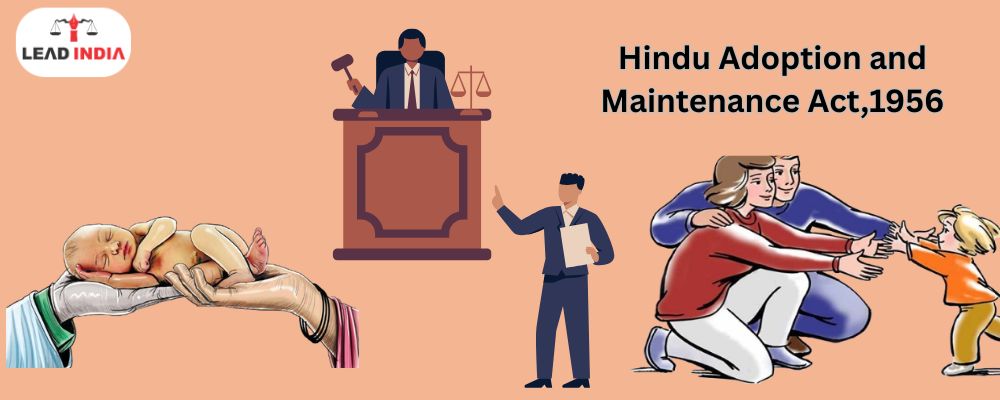
One important piece of legislation that controls the legal procedure for adoption and maintenance among Hindus in India is the Hindu Adoption and Maintenance Act, 1956 (HAMA). that the law has changed over time to accommodate shifting social demands and to provide greater clarity, especially when it comes to international adoption cases. An important step toward easing international adoptions under HAMA has been taken with the most recent change through the Adoption (change) Regulations, 2021.
Who Can Adopt Under the Hindu Adoption and Maintenance Act?
Eligibility of a Hindu Male (Section 7)
A Hindu male can adopt a child if:
- He is of sound mind and has attained majority (18 years).
- He has a living wife, and her consent is mandatory.
- If the wife is incapacitated (insane, renounced world, etc.), consent may be waived.
- If he has more than one wife, consent of all wives is required.
Need A Legal Advice
The internet is not a lawyer and neither are you. Talk to a real lawyer about your legal issue
Eligibility of a Hindu Female (Section 8)
A Hindu woman can adopt a child if:
- She is of sound mind and a major.
- She is unmarried, divorced, or a widow.
- A married woman cannot adopt independently unless her husband is deceased, has renounced the world, or is declared mentally unsound
Who Can Give a Child in Adoption? (Section 9)
A child can legally be given in adoption by:
- Biological father, with the mother’s consent.
- Biological mother, if the father is:
- Deceased
- Mentally unsound
- Renounced the world
- Converted to another religion
Note: Adoptive parents cannot re-give the adopted child for further adoption.
Role of Guardians
A guardian (appointed by parents or the court) can place the child for adoption only with court permission, and only if:
- Both biological parents are dead, have renounced the child, or are legally unfit.
- The court is satisfied that adoption is in the best interest of the child and no monetary exchange is involved.
Legal Validity of Adoption (Section 6)
For an adoption to be valid:
- The adopter is legally capable of adopting.
- The child is eligible for adoption.
- The person giving the child up for adoption is legally competent.
- All procedures are fulfilled as per the Act.
Latest Amendment: International Adoption under HAMA (2021 Update)
To simplify the international adoption process, the Adoption (Amendment) Regulations, 2021 was notified. It brought key procedural changes for adoptions under HAMA by Indian citizens residing abroad or for adoptions involving non-Hague Convention countries.
Key Highlights of the 2021 Amendment:
New Chapter: Procedure for Relocating Adopted Child Abroad
This applies to:
- Adoptive parents living outside India adopting under HAMA.
- Adoptions involving countries not part of the Hague Convention.
- Hindus residing abroad adopting a child of Indian Hindu origin.
- Verification & Registration Process
- Adoption deed must be jointly submitted to:
- The District Registrar for registration, and
- The District Magistrate for record.
- A new Schedule XXXIII is added for issuing the Verification Certificate.
- Schedule XXXIII – Verification Certificate
This certificate confirms the legal adoption under HAMA and supports cross-border recognition of the adoption.
Recognized Authorities
- Prospective adoptive parents living abroad can approach:
- Authorized Foreign Adoption Agencies
- Central Authority in their country (if non-Hague country)
- Relevant Government departments
Conclusion
Better documentation, easier relocation, and cross-border legal acceptance of adoptions are all made possible by the 2021 amendment, which guarantees that Indian adoption laws are in line with international norms. It improves adoptions’ accountability and openness under HAMA, especially when children are being transferred overseas.
To guarantee the legitimacy and validity of the adoption, it is imperative that adoptive parents and legal professionals adhere to these procedural standards.
One can talk to lawyers from Lead India for any kind of legal support. In India, free legal advice online can be obtained at Lead India. Along with receiving free legal advice online, one can also ask questions to the experts online free through Lead India.
FAQs
1. Who can adopt under Hindu law?
A Hindu man or woman who is an adult and of sound mind. Women must be unmarried, divorced, or widowed.
2. Can a married Hindu woman adopt alone?
No, unless her husband is dead, insane, renounced the world, or changed religion.
3. Who can give a child up for adoption?
Only biological parents or a guardian with court approval.


 Talk to a Lawyer