
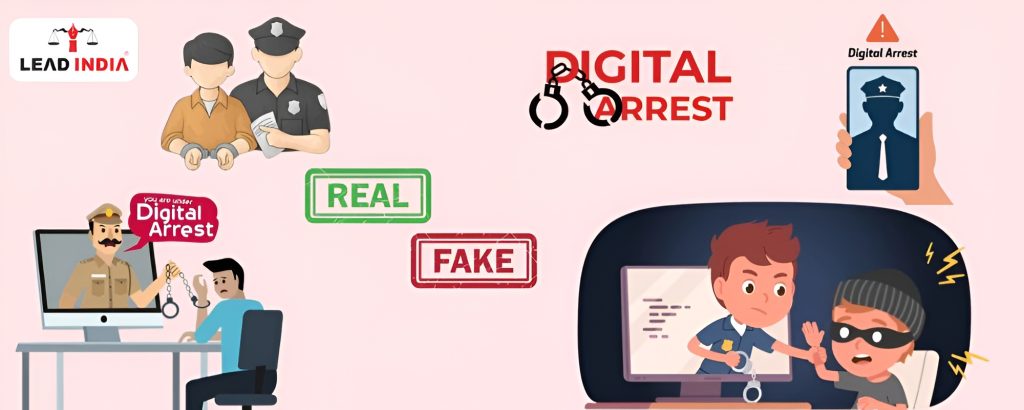
Whenever a person receives a call claiming that they are under a “digital arrest”, the first and biggest confusion that comes to their mind is:
“Can the police really arrest me over a phone or video call?”
“Is this a real legal case or am I being scammed?”
This confusion is completely natural. In most cases, people approach a lawyer only after they receive a threatening call from someone claiming to be police, CBI, or ED, they are told that an FIR has already been registered against them, they are asked to stay on a video call continuously, they are asked to transfer money to avoid arrest, or they are warned not to speak to family members or lawyers.
Understanding what “digital arrest” actually means, what the law permits, and what the police cannot do, helps people avoid panic, financial loss, and serious mental stress.
What “Digital Arrest” Is and What It Is Not
A Digital Arrest is not recognised under Indian law.
There is no provision under Indian criminal law that allows any authority to arrest, interrogate, or keep a person in custody through a phone call, WhatsApp call, or video conference.
One of the most common misunderstandings is that police or investigating agencies have the power to declare someone “under arrest” digitally. This is completely incorrect. Arrest in India must always be physical and must follow strict legal procedure.
Another important point to understand is that a digital arrest does not replace legal investigation. Real criminal cases involve written notices, summons, court orders, and physical proceedings. A phone call has no legal force by itself.
What a Digital Arrest Call Really Means in Practice
In simple terms, a digital arrest call is a fear-based cyber fraud technique.
The caller usually claims that:
- Your Aadhaar or PAN has been misused,
- Your bank account is linked to illegal transactions,
- An FIR has already been registered,
- Your arrest has been approved, and
- You must cooperate immediately to avoid jail
The scam works because the caller uses legal language, fake designations, fake ID cards on video calls, and creates extreme urgency. Victims are usually pressured to act without thinking or without verifying.
A true police officer or the government official does not conduct any investigations through video calls as well as he does not demand money for verification or any kind of settlement.
How Digital Arrest Scams Usually Operate
Although the facts may change, the method used by scammers is almost always the same.
- First, they impersonate authorities such as police officers, cybercrime officials, CBI, Enforcement Directorate, customs officers, or narcotics officers. Fake caller IDs and government-style email addresses are commonly used.
- Secondly, they create fear by linking the victim to the most serious crimes such as money laundering, drug trafficking, or international fraud.
- Thirdly, they mostly isolate the victim by instructing them not to speak to the family members, friends, or lawyers, and also by insisting that the call must not be at any time disconnected.
- Finally, money is demanded under excuses such as verification charges, security deposits, or settlement before court action. Payments are usually asked through UPI, bank transfers, crypto wallets, or gift cards.
How to Immediately Identify a Digital Arrest Scam
The clearest indicator is this: no police officer can arrest you over a phone or video call.
Under Indian law, arrest must be physical and must follow due process. This includes informing the person of the grounds of arrest and following constitutional safeguards.
A genuine FIR or criminal case is never communicated only through phone calls. Real cases involve written notices, summons, and court procedures. Police also never demand money over calls.
Another clear sign of fraud is any demand for payment through UPI or private bank accounts. Fines can only be imposed by courts and are paid through authorised channels.
If the caller threatens immediate arrest or says that involving a lawyer will worsen your case, it is a red flag. Every person has the legal right to consult a lawyer of their choice.
What the Law Actually Says About Arrest in India
Indian law places strict limits on arrest powers. Police are required to justify the need for arrest and, in many cases, issue a notice of appearance instead of arresting a person. Arrest cannot be arbitrary, mechanical, or used as a punishment.
Courts have consistently held that personal liberty cannot be taken away casually and must be protected unless arrest is absolutely necessary under law. A so-called digital arrest violates all principles of due process.
Judicial Approach to Unlawful Arrest and Coercion
Courts in India state that it is not necessary to always arrest someone if there is a good reason to do so; furthermore, courts have stated that using fear, threats, or intimidation against a person violates fundamental rights.
The law was created to provide assistance and protection for crime victims and simultaneously protect innocent individuals from criminal abuse of authority. Investigating a person with fear or coercion provides no legal protection to anyone involved.
Laws Commonly Misused by Digital Arrest Scammers
The scammers usually threaten the victims by mentioning the criminal provisions relating to cheating, forgery, narcotics, or the money laundering.
Only the authorised investigating officers, acting through the proper legal procedure as well as the written notices, can invoke these laws. The random phone calls citing legal sections have no legal value.
What You Should Do If You Receive a Digital Arrest Call
If you get a phone call claiming that you’re being arrested digitally. The first step is to remain calm, hang up and disconnect. It isn’t required to continue talking; therefore, there are no legal consequences for hanging up the phone.
Also, do not give the caller any personal information like your Aadhaar, PAN, OTP’s, bank information or your family members’ information.
If you feel uncomfortable about the call, verify it independently. Go to your local police station or ask a lawyer about it. You should never use the contact information the caller provides to you.
You should contact the Cyber Crime Helpline (1930) or report the incident on the Cyber Crime Official Portal immediately to be able to stop or recover any money lost. Reporting it early increases your chances of stopping or recovering any money that was sent.
What If Money Has Already Been Transferred
Once you’ve sent money from your account, you should take immediate action.
You can take legal actions by reporting a complaint to the Cyber Crime Division, requesting your bank to stop any transactions that may have occurred, filing a police report for cheating and impersonation, and taking legal action for recovery.
The Courts will acknowledge that there are rights for victims of cybercrimes and when a complaint is made in a timely manner, the Courts will initiate an investigation and provide relief to you.
Criminal Liability of Digital Arrest Scammers
Digital arrest scams involve criminal liability for persons who are involved in these types of scams. Criminal liabilities include many serious criminal violations, including impersonating others and/or presenting false identification, fraud, coercion through deceptive means, forgery, false representation, and online fraud.
If the crime was committed through the internet, law enforcement agencies across the country will investigate these types of scams upon receipt of proper complaints.
How a Lawyer Helps in Digital Arrest Cases
A lawyer can conduct research to determine whether any legitimate criminal prosecution exists and can communicate appropriately with law enforcement, prevent unlawful coercion of victims, provide victim assistance in recovery of lost funds, and provide legal representation if the victim’s constitutional rights have been violated.
Early contact with a lawyer will help to minimize both financial and emotional harm.
Digital Arrest vs Real Police Procedure
A digital arrest is a fraud technique used by criminals. A real arrest follows lawful physical procedure, written documentation, and court oversight.
A phone call demanding money or secrecy has no legal standing.
What You Should Practically Do Right Now
If you receive a digital arrest call:
- Do not panic
- Do not transfer money
- Do not share personal details
- Do not stay on video calls
- Verify independently
- Report immediately
Wrong decisions taken in panic often result in irreversible financial loss.
How We Help Victims of Digital Arrest Scams
We mostly help individuals to understand whether the call is genuine, verify any of the alleged case, communicate with the authorities legally, file the cybercrime complaints, and take the legal action for recovery and protection.
Our primary approach focuses on the protecting of personal liberty, preventing financial loss, as well as ensuring that the law is used as shield and not as a weapon.
One can talk to lawyer from Lead India for any kind of legal support. In India, free legal advice online can be obtained at Lead India. Along with receiving free legal advice online, one can also ask questions to the experts online free through Lead India.
FAQs
1. Is digital arrest legally valid in India?
No. There is no legal concept of digital arrest under Indian law.
2. Can police arrest me over a video call?
No. Arrest must always be physical and follow due process.
3. Can the police demand money to avoid arrest?
No. Any of such demand is illegal as well as fraudulent.
4. What should I do if I receive such type of call?
Disconnect, verify independently, and report immediately.
5. What if I already paid money?
Report the matter urgently to cybercrime authorities and seek legal help.
6. Are digital arrest scammers punishable?
Yes. They are liable for serious criminal offences under Indian law.


 Talk to a Lawyer