
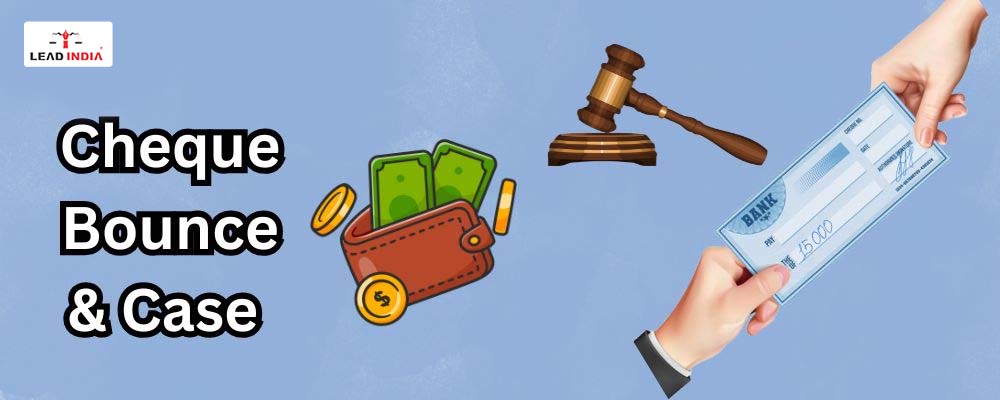
A common dilemma faced by many is when the drawer of the cheque asks for more time or promises to repay the amount later, should you still proceed legally?
This guide answers that question in depth with legal provisions, case laws, and actionable steps.
When a Cheque Bounces in India? What the Law Says?
If you’ve ever had a cheque returned marked “insufficient funds,” it’s frustrating and, frankly, feels like betrayal, especially when it involves trust.
As per Section 138 of the Negotiable Instruments Act 1881, You can file a criminal case if:
- The cheque was written for a debt that was actionable by law.
- The bank returns the cheque unpaid due to no funds or over-limit.
- In 30 days of the cheque that is returned, you must file a legal notice.
- The person doesn’t pay within 15 days of receiving your notice.
- You file a case within one month after that.
My Experience: “I almost didn’t send the legal notice on time, thinking he’d pay up. That delay nearly cost me the right to file a case. Don’t make that mistake.”
Need A Legal Advice
The internet is not a lawyer and neither are you. Talk to a real lawyer about your legal issue
What If They Promise to Pay Later? Does That Change Anything?
You might hear things like:
- “Just give me a few more days.”
- “I’ll transfer the amount next week.”
- “Don’t file a case, we’re friends.”
Key Legal Points:
- The 15-day period after your notice is legally fixed.
- A verbal or written promise does not cancel criminal liability.
- If the money isn’t paid in full within that time, the offence is complete.
Real Case Reflection: “I had WhatsApp messages where he promised to pay. The court said that doesn’t matter unless the money was actually paid. It was a harsh truth.”
What the Courts Have Repeatedly Said: Key Judgments
- CC Alavi Haji v. Palapetty Muhammed (2007): Even if the drawer offers to pay later, the offence stands if payment wasn’t made in time.
- Dalmia Cement v. Galaxy Traders (2001): The clock begins when the cheque bounces as well as the notice is sent. No payment = offence.
- Sampelly Rao v. IREDA Ltd. (2016): If the cheque was issued against an actual debt, it triggers Section 138 on bounce. Security cheques may be different.
- K. Bhaskaran v. Vaidhyan Balan (1999): You need to make a list of all the steps that makes up the offence. Post-bounce talks don’t change the outcome.
- MMTC v. Medchl Chemicals (2002): Even partial payments don’t protect the drawer unless the entire amount is paid in time.
Can You Still Settle Without Going to Court?
Yes, but only within the 15-day window after your legal notice.
If they pay the full amount in time:
- No case needs to be filed.
- It’s resolved.
But if you wait too long, or they make only partial payment, the criminal liability stands.
Pro Tip: “I thought that by extending the time, I was being nice. It ended up working against me. The law is strict with timelines.”
What You Should Do Step-by-Step (If You’re the Payee)
- Send a Legal Notice: Between thirty days period of the cheque getting bounced, the notice is sent.
- Wait 15 Days: Let the other side respond or pay. The legal clock does not change if they want more time.
- Be Ready to File Complaint: If there is no payment made within 15 days, you have only one month to file it in court.
- Keep Evidence of Everything: Save messages, emails, or any written promises, but know they won’t stop the case unless payment is made.
What If You Gave More Time Out of Trust?
- Good faith is admirable, but the court needs documents and deadlines, not good intentions.
- Yes, you can still file the case, but only within the allowed timeframe. After that, you may have to seek permission to file late (condonation), which isn’t guaranteed.
- I filed after 40 days thinking I could explain why. The court dismissed it as time-barred. Lesson learned.
Should You Go Ahead and File the Case? Or Try to Settle?
You should file if:
- The person has cheated you before.
- The amount is large.
- You want a legal deterrent or formal complaint.
You could consider settling if:
- The drawer is honest but struggling.
- There’s a personal relationship.
- They provide written repayment terms with security cheques or collateral.
“After I filed the complaint, he sent me the money in a matter of weeks. If I hadn’t, he’d have kept delaying. Sometimes, legal pressure works.”
How to File the Cheque Bounce Case?
Where to File?
As per Dashrath Rupsingh Rathod v. State of Maharashtra (2014), you can file where:
- The cheque was deposited, or
- The cheque was drawn from which bank branch.
What Documents You’ll Need?
- Original bounced cheque
- Return memo from the bank
- Copy of legal notice and delivery proof
- Complaint petition and your affidavit
Timelines to Remember
- Send Legal Notice: Within 30 days of the cheque’s dishonoured date.
- Wait for Payment (Post-Notice): After getting the notice, the drawer has in his hand fifteen days to give the payment.
- File Complaint in Court: If no payment is made, file a complaint within 30 days from the expiry of the 15-day period. File Complaint Within 1 month after that.
Final Word: Protect Yourself, File If You Must
- If someone gives you a cheque and it bounces, and they fail to pay even after your legal notice, file the case, even if they make promises later.
- A cheque is a legal commitment. Don’t let delays or emotional blackmail weaken your rights.
- Filing the case didn’t ruin the relationship. It restored my money, and my confidence.
One can talk to lawyer from Lead India for any kind of legal support. In India, free legal advice online can be obtained at Lead India. Along with receiving free legal advice online, one can also ask questions to the experts online free through Lead India.
FAQs
1. Can I still file a cheque bounce case if the person has promised to pay later?
Yes, you can. Even if the drawer later made a verbal or written commitment, you may still bring a case under Section 138 if they do not pay the entire amount within fifteen days of receiving your legal notice.
2. How long does it take to submit a legal notice in India after a check bounces?
In accordance with Section 138 of the Negotiable Instruments Act of 1881, you have 30 days from the date of cheque dishonour to send the legal notice.
3. Does a written assurance after cheque bounce stop criminal liability?
No, criminal liability is not waived by a promise or assurance after the bounce. The offence is deemed complete if the money is not paid within 15 days of receiving the notice.


 Talk to a Lawyer