
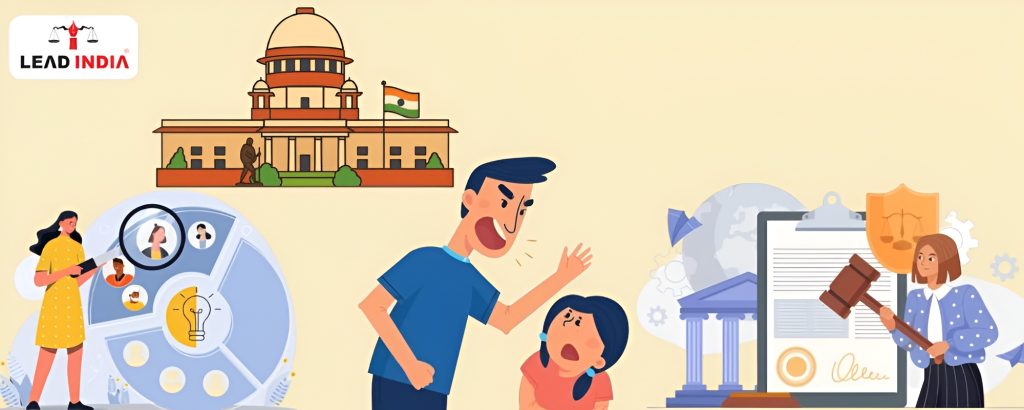
Being abused and tortured in the house can be too overwhelming and terrifying. So many women in this country suffer in silence because they see domestic violence as a “private matter” that should not be reported. The Domestic Violence Act, 2005, has been enacted to ensure that a woman is protected in terms of dignity and safety.
Formal cruelty by a husband or his relatives would be seen as a criminal offense under Section 498A of the IPC/Section 85 of the Bhartiya Nyaya Sanhita, whereas, being mainly civil in nature, this system of Domestic Violence offers remedies such as immediate protection orders, right to residence, maintenance, and compensation.
In this article, we will be discussing the protection granted under the DV Act, the rights of women under the law, courts, and also feasible landmark judgments which have given a practical shape to the Act.
What Are the Main Objectives of the DV Act?
- Give women quick protection orders from courts.
- Treat abuse as more than just an act of bodily harm-injury to feelings, sexual harassment, and economic violence are counted as well.
- Allow a woman to stay at home, even if it is in the name of her in-laws.
- Provide financial relief and maintenance.
- Create a support system with Protection Officers, service providers, and NGOs.
Who Can Use the DV Act: Key Definitions in Simple Terms
When a woman walks into office with questions like “Am I eligible to file under the DV Act?”, we explain these terms:
- Aggrieved Person: Any woman in a domestic relationship who alleges abuse. Even divorced women can claim relief if the violence was linked to marriage.
- Respondent: Not just husbands, mothers-in-law, brothers-in-law, or any relative living with you can be respondents.
- Shared Household: A place where an aggrieved person lives or has lived in the company of the respondent, husband, or his relatives/in-laws, irrespective of whether she lives there on her own will or not.
- Domestic Violence (Section 3): It includes physical abuse, sexual abuse, etc., and economic abuse, including denying money, food, shelter, etc.
In experience, many women think domestic violence means only physical beating. But denial of stridhan (dowry items), controlling your salary, or constant threats also qualify as domestic violence.
What Protections Can You Get from the Court Under the DV Act?
1. Protection Orders: Can the Court Stop My Husband from Threatening Me?
- Yes. Under Section 18, the Magistrate can stop the abuser from contacting, threatening, or entering your workplace.
- First-hand insight: In practice, women often get an ex parte protection order (without the husband being heard first) if there is urgency. Magistrates sometimes issue such orders the same day the application is filed.
- Case Law: V.D. Bhanot v. Savita Bhanot (2012): The Supreme Court has ruled that the DV Act applies also to acts of violence which happened before the law was in force.
2. Residence Orders: Can My In-Laws Throw Me Out of the House?
- No. Section 19 ensures your right to live in the shared household, regardless of ownership. The Magistrate can also order alternate accommodation.
- First-hand insight: Many women fears being thrown out after a fight. Courts generally pass status quo orders quickly, meaning you cannot be evicted until the matter is heard.
- Case Law:
- S.R. Batra v. Taruna Batra (2007) initially limited residence rights only to property owned or rented by the husband.
- Satish Chander Ahuja v. Sneha Ahuja (2020) later expanded the definition; wives can claim residence even in in-laws’ homes.
3. Monetary Relief: Can I Get Maintenance for Myself and My Kids?
- Yes. Section 20 allows the court to order the respondent to pay for your living expenses, medical costs, and children’s education.
- First-hand insight: In most cases, the court asks both parties to submit income affidavits. This helps the judge decide fair maintenance.
- Case Law: Rajnesh v. Neha (2020): The Supreme Court laid down the most detailed guidelines on maintenance.
4. Custody Orders: Can I Get Custody of My Child If I Leave?
- Yes. Section 21 permits the mother to have temporary custody of the children. If it is unsafe for the child, the court may limit the father’s visitation privileges.
- First-hand insight: In urgent cases, temporary custody is given within weeks. Judges often grant immediate custody to mothers when the child’s welfare is at risk.
5. Compensation Orders: Can I Claim Damages for Emotional Abuse?
- Indeed. The court may grant damages for emotional and mental distress as per Section 22.
- Case Law: Inderjit Singh Grewal v. State of Punjab (2011): clarified compensation is an independent civil remedy.
6. Emergency and Ex Parte Orders: Can I Get Immediate Protection Without Hearing Him?
- Yes. Courts can pass urgent orders if waiting may put you at risk.
- First-hand insight: In emergencies, Magistrates grant relief within 24-48 hours of filing, especially in cases of violence.
How Do Protection Officers and Service Providers Help You?
When a woman files under the DV Act, the Protection Officer in her district helps with:
- Filing the Domestic Incident Report (DIR)
- Arranging medical treatment
- Connecting with shelter homes
- Assisting with court documents
First-hand insight: In practice, Protection Officers are often overburdened, but NGOs step in. Many clients got safe shelter the same day through service providers.
What Rights Do Women Get Under the DV Act?
- Right to reside in shared household
- Right to seek protection orders
- Right to maintenance and financial support
- Right to custody of children
- Right to claim compensation for damages
- Right to speedy justice, courts must list your case within 3 days and aim to finish within 60 days
How Have Courts Expanded the DV Act?
- Hiral P. Harsora v. Kusum Harsora (2016): Allowed women to file against female relatives.
- Shalini v. Kishor (2015, Bombay HC): Divorced women also protected.
- Krishna Bhattacharjee v. Sarathi Choudhury (2016): Not returning stridhan = continuing domestic violence.
From experience, women often think divorce ends their remedies. But courts have clarified that financial rights and stridhan claims continue even post-separation.
Challenges in Real-Life Implementation
- Allegations of misuse: The courts have said isolated misuse does not affect genuine victims.
- Implementation gaps: Protection Officers often lack resources.
- Judicial delays: Though law says 60 days, cases can take months.
- Awareness issues: Many women in rural areas are unaware of their rights.
Conclusion
Under the DVA 2005, women are given the right to ask for protection, residence, maintenance, and compensation. However, the biggest challenge remains to generate awareness and take timely action.
If you are in the situation of domestic violence, lodge a complaint with the Magistrate or notify the Protection Officer of the concerned district. Very often, one can obtain immediate relief, like a protection order or the right to residence, in a matter of days. It is important to take the very first step for your safety and justice.
One can talk to lawyer from Lead India for any kind of legal support. In India, free legal advice online can be obtained at Lead India. Along with receiving free legal advice online, one can also ask questions to the experts online free through Lead India.
FAQs
1. What is considered domestic violence under the DV Act in India?
Domestic violence includes physical abuse, emotional or verbal insults, sexual abuse, and economic control like denial of money or shelter.
2. Can a woman stay in her husband’s or in-laws’ house under the DV Act?
Yes. The DV Act gives women the right to reside in the shared household, even if it is owned by in-laws, as clarified in Supreme Court rulings.
3. How long does it take to get relief under the Domestic Violence Act?
The Magistrate must list the case within three days and try to dispose of it within 60 days, though practical delays sometimes occur.


 Talk to a Lawyer