
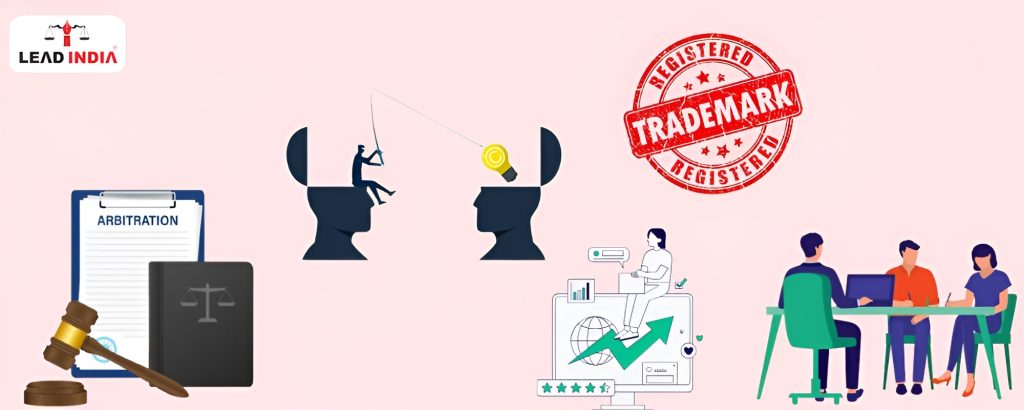
In India, the resolution of commercial litigation is now dominated by arbitration because it is faster. Private, expert arbitrators can be hired, and it is less formal and more efficient than litigation. As provided in the Arbitration and Conciliation Act, 1996 (Arbitration Act), arbitration may be sought for any civil or commercial disputes under the following conditions:
- The dispute is covered in the arbitration agreement.
- Both parties agree to arbitration.
- The subject matter is legally capable of being arbitrated.
But here lies the challenge, are all disputes arbitrable? Indian law does not provide a fixed list of arbitrable disputes. Courts have therefore played a crucial role in deciding which matters can go to arbitration. Intellectual property rights (IPR) disputes, especially trademark disputes arising out of contracts, fall right in the middle of this debate.
Need A Legal Advice
The internet is not a lawyer and neither are you. Talk to a real lawyer about your legal issue
How Indian Courts Decide What Can Be Arbitrated?
Indian courts draw a line between:
- Personal rights (rights in personam): enforceable between contracting parties → usually arbitrable.
- Public rights (rights in rem): enforceable against everyone → courts handle these.
A Real Example: Booz Allen Case
When advising clients on arbitration clauses, it is often referred to Booz Allen v. SBI Home Finance Ltd. (2011). Here, the Supreme Court clarified that:
- Contractual rights are arbitrable.
- Core public rights like marriage, insolvency, or criminal cases are not.
This case gave the first big framework that still guides lawyers today.
The Turning Point: Vidya Drolia’s Case
In Vidya Drolia v. Durga Trading (2020), the Supreme Court simplified things. This judgment is explained to clients as the four-part filter: arbitration is barred if:
- The law expressly prohibits it.
- The subject is a right in rem.
- It impacts third-party rights.
- It involves State functions.
For trademark disputes within contracts, most don’t hit these barriers, making them arbitrable.
Take on Intellectual Property Arbitration in India
As a lawyer, there is seen arbitration clauses in:
- Film distribution agreements
- Franchise and licensing deals
- Technology transfer contracts
When disputes arise, parties often hesitate- “Can arbitrators decide on trademarks?” Courts have increasingly said yes, as long as it’s a contractual dispute between parties.
Key Judgments Every Business Should Know
Eros International v. Telemax (2016): Copyright & Licensing
- Scenario: Film distribution contract with arbitration clause.
- Ruling: Dispute was arbitrable. Arbitrators can grant injunctions and damages between contracting parties.
Practical Takeaway: Always include arbitration clauses in IP-heavy contracts.
Golden Tobie v. Golden Tobacco (2021): Trademark Licensing
- Scenario: Breach of a trademark license agreement.
- Ruling: Trademark licensing disputes are arbitrable.
Liberty Footwear v. Liberty International (2023): Partnership Trademark Use
- Scenario: Dispute over the “LIBERTY” mark in a partnership.
- Ruling: Since it was contractual enforcement, not registration, it was arbitrable.
- Practical Lesson: Courts respect party autonomy in commercial disputes.
When Arbitration Works Best for Trademark Disputes?
From first-hand client cases, arbitration has worked especially well in:
- Licensing agreements: disputes over royalty payments or quality control
- Franchise contracts: enforcing brand standards
- Distribution deals: unauthorized sales outside territories
These disputes are personal, commercial, and contractual, ideal for arbitration.
When You Still Need the Courts?
Despite its benefits, arbitration cannot solve everything. Based on real-world matters:
- Third-party infringement: a competitor copying your mark → only courts can issue public injunctions.
- Trademark registration disputes: validity, grant, or revocation → under statutory jurisdiction.
- Public enforcement rights: cases affecting everyone, not just contracting parties.
Expert Insight: Why Businesses Shouldn’t Skip Arbitration Clauses?
In many contract reviews, it is noticed parties leave out arbitration clauses, thinking they can “go to court if needed.” But once a dispute arises, both sides regret not choosing arbitration.
Practical Benefits that are Seen:
- Saves years of litigation
- Keeps disputes private, critical for brand reputation
- Allows appointment of subject-matter experts as arbitrators
For businesses, arbitration is not just a legal formality, it’s a strategic safeguard.
Conclusion
Indian courts now clearly affirm that trademark disputes arising out of contracts are arbitrable, provided they involve enforcement of contractual rights and fall under an arbitration agreement. Arbitrators can grant the same remedies as civil courts, including injunctions and damages, in disputes between contracting parties.
In legal practice, arbitration has often been the difference between a quick resolution and a five-year court battle. If your business relies on brand value, whether through franchises, licensing, or collaborations, always negotiate and insert a strong arbitration clause. It’s one of the smartest ways to protect your trademark rights in India.
One can talk to a lawyer from Lead India for any kind of legal support. In India, free legal advice online can be obtained at Lead India. Along with receiving free legal advice online, one can also ask questions to the experts online free through Lead India.
FAQs
1. Can trademark disputes be arbitrated in India?
Yes. If a trademark dispute arises from a contract with an arbitration clause, it is arbitrable. Courts in Eros International, Golden Tobie, and Liberty Footwear have confirmed this principle.
2. What types of trademark disputes are best suited for arbitration?
Arbitration works well for disputes from licensing agreements, franchise contracts, distribution deals, and partnership deeds where rights are personal and contractual.
3. When are trademark disputes not arbitrable?
Trademark registration, grant, or revocation, and disputes involving third-party infringement are not arbitrable. Such matters must go to courts or statutory authorities.


 Talk to a Lawyer