
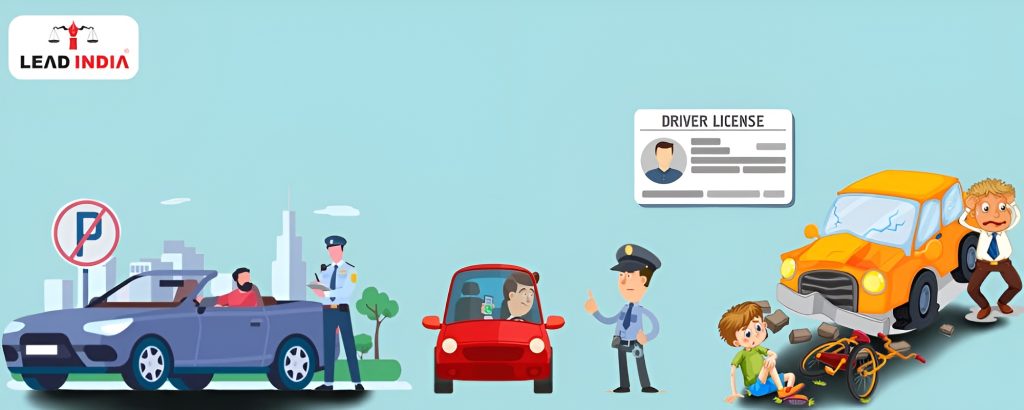
Ever expanding India’s road network coupled with an increase in the number of vehicles in the country poses a significant traffic management challenge. Accidents are common, and fatalities are high in India due to a slew of dangerous traffic violations such as reckless driving, driving under the influence of alcohol, speeding, driving without valid documents, and overloading.
The amended Motor Vehicle Act, 1988, egregiously limits the powers of traffic officials and restricts the imposition of fines, the issuance of challans, and the seizure of vehicles. In fact, motorists seem to suffer the brunt of unreasonable and apparently arbitrary fines and seizures.
What legal recourse is available in India in the event of an unwarranted challan or the unfair and unlawful seizure of the vehicle? This is the most important question now-a-days. Therefore, let us delve deeper into the law, possible remedies, and notable court rulings.
Which Laws Allow Police to Seize or Fine You?
- Motor Vehicles Act, 1988: Sections 177-210 set penalties. Section 207 gives seizure powers.
- 2019 Amendment: Fines increased, e-challans introduced.
- State Rules: Every state transport department issues its own challan rules.
Tip from practice: Always check your state transport website. It is seen that many people paying “on-the-spot fines” when their challan wasn’t even genuine.
What to Do If You Get a Challan?
- If valid: Pay online at Parivahan Sewa.
- If wrongful (wrong number, duplicate challan): Contest before the Traffic Court or Magistrate.
Case handled: A businessman received four duplicate challans for the same violation. We contested, and the Magistrate quashed them citing State of Gujarat v. Rajesh Kumar Barot (1996).
What If Police Wrongfully Seize Your Vehicle?
Under Section 207 MV Act, vehicles can be seized if:
- No registration/fitness/permit.
- Driver has no license.
- Vehicle is used illegally.
Your Remedy:
- Apply to the transport officer for release.
- If delayed, approach the Magistrate under CrPC Sections 451/457/BNSS Sections 497/503.
First-hand note: There was a client whose truck was held for months. After citing Sunderbhai Ambalal Desai (2002), the court ordered immediate release, saving him lakhs in business losses.
Can You Challenge an Illegal Seizure?
Yes. If police act beyond their powers:
- File petition in Magistrate Court.
- Or move the High Court under Article 226 Writ Petition.
Courts have ruled in Basavva Kom Patil (1977) that arbitrary seizure violates rights.
Do You Get a Hearing Before Confiscation?
- Yes. Confiscation (permanent loss) requires notice and a chance to be heard. Shambhu Dayal Agarwala (1990) makes this clear.
- Practical experience: The law firm once defended a car owner who was about to lose his vehicle to confiscation without notice. The court stopped it immediately citing natural justice.
Can You Avoid a Full Trial for Minor Offences?
- Yes, through Compounding of Offences (Section 200 MV Act). You pay a fixed fine and the case closes.
- This is a fast, low-cost remedy the lawyers recommend to many clients who just want closure.
What If You’re Convicted in Court?
- For serious offences (rash driving, drunken driving), you may face conviction. But you can always appeal in Sessions/High Court.
- Dalbir Singh v. State of Haryana (2000): Though it affirmed the strict punishment, the decision also upheld appellate remedies.
Your Constitutional Rights Protect You Too
- Article 14: No arbitrary action.
- Article 21: Right to liberty – illegal seizure = violation.
- Article 300A: Right to property: vehicles cannot be taken without due process.
Lawyer’s perspective: Various lawyers used these constitutional rights in many writ petitions where police acted high-handedly. Courts usually respond quickly in such matters.
Practical Checklist: What You Should Do Immediately?
- Pay genuine fines online, never in cash without receipt.
- Check challan details on Parivahan or state site.
- Keep photocopies of license, RC, insurance, and PUC in your vehicle.
- For wrongful seizure: Apply to transport officer, then Magistrate.
- For arbitrary police action: File writ petition in High Court.
Conclusion
Traffic laws are strict, and rightly so for road safety. But enforcement must be fair. Wrong challans and arbitrary seizures can be fought, and the law is on your side.
In practice, it is seen that the clients recover vehicles within days once the right legal steps are taken. The key is awareness and timely legal action.
If you ever face such a situation, consult a traffic law advocate immediately, don’t suffer the consequences of wrongful penalties or illegal seizures.
One can talk to lawyer from Lead India for any kind of legal support. In India, free legal advice online can be obtained at Lead India. Along with receiving free legal advice online, one can also ask questions to the experts online free through Lead India.
FAQs
1. Can the police remove my car and not notify me?
By the letter of the law, no. Police may only remove cars that are parked illegally, in which case they must issue a ticket and inform the owner where the car has been towed.
2. What documents must I carry to prevent the seizure of my vehicle?
Your driver’s license, registration certificate (RC), insurance certificate, and pollution under control (PUC) certificate must be on you always. A valid permit and fitness certificate are mandatory for commercial vehicles.
3. How long can police keep my seized vehicle?
Courts have directed that vehicles should not be kept in custody for long. If your vehicle is not released promptly, you can approach the Magistrate Court for interim release.
4. Can I get compensation if my vehicle is damaged in police custody?
Yes. You can claim compensation by filing a petition in court if your vehicle is damaged due to negligence of authorities while in custody.


 Talk to a Lawyer