
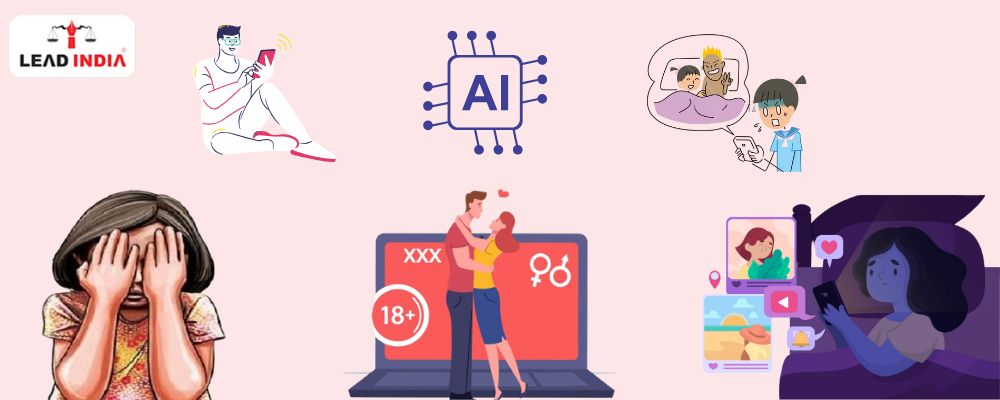
The use of Artificial Intelligence has changed the way we create and communicate with one another. However, it has also given rise to an opportunity for the malicious use of creative content. Photos that are publicly available can be used to create obscene images, morph nudes, or create Deepfake pornography of someone without their consent. The speed at which these altered images can be distributed is greater than the speed at which the victims can respond, therefore the emotional and psychological harm they create will far outlast any physical harm; thus, there is a basis for legal protections against the use of creative content for harmful purposes:
- Emotional trauma
- Social humiliation
- Career or academic hardship
- Blackmail and extortion
- Cyber harassment and stalking
The law recognises these harms. Indian courts and cybercrime authorities treat AI-generated obscene content as a serious criminal offence, even if the content is fabricated and not “real.”
This article explains exactly what to do step by step as soon as you discover that obscene AI content of you is being circulated online, and how Indian law protects you.
What Counts as Obscene AI Content?
Deepfake-related crimes have become increasingly common in cybercrime cases the law firm assists with. Examples include:
- AI-generated nude images using Instagram photos
- Morphed explicit videos circulated on school or office WhatsApp groups
- Sexual deepfake videos sent by ex-partners to threaten victims
- Deepfake pornography uploaded to Telegram channels and porn websites
- Voice-cloned sexual conversations used for intimidation
One client said that, “I never posted anything inappropriate online, but when the deepfake went around my college group, people still doubted me.”
Whether the content is real or it is a fake content, does not matter. The harm is real, and the law makes it a criminal offence.
Your First 24 Hours After a Deepfake Leak: What You Must Do (Based on Real Case Experience)
The first 24 hours determine how far the content spreads and how strong your case becomes. Here is the exact approach we advise based on real cases.
Capture Evidence Immediately
Do not delete or report anything until evidence is secured. Save:
- Screenshots
- URLs
- Usernames and group names
- Number of views, shares, or comments
- Date and time
- Screen recordings of the content
In one case, a victim deleted everything in panic, delaying the FIR because no initial evidence remained.
Evidence strengthens your legal position and enables quick action.
Report the Content on the Platform
Major platforms allow reporting non-consensual sexual content through dedicated categories:
- Instagram and Facebook: “Nudity involving me”
- Twitter/X: “Private media posted without permission”
- YouTube: Privacy complaint form
- Telegram: Abuse bot
- Porn websites: Non-consensual content forms
File a Complaint
- Visit: www.cybercrime.gov.in Select “Report Women/Child Related Crime.”
- Anyone can choose this category, including male victims, because the issue relates to sexual imagery. You can attach all evidence and file anonymously if needed.
- Many victims prefer anonymity initially due to fear or embarrassment.
File an FIR at the Nearest Police Station
Obscene AI-generated content is a cognizable offence. Police must file an FIR and cannot refuse or delay.
Relevant IT Act Sections
- Section 66E: Violation of privacy
- Section 66D: Impersonation by electronic means
- Section 67: Obscene content online
- Section 67A: Sexually explicit content
- Section 67B: Child-related sexual content
Relevant IPC/BNS Sections
- Section 354A IPC/Section 75 BNS: Sexual harassment
- Section 354C IPC/ Section 77 BNS: Voyeurism
- Section 354D IPC/ Section 78 BNS: Stalking
- Sections 499/500 IPC/ Section 356 (1) & (2) BNS: Defamation
- Sections 503/506 IPC/ Section 351 (1) & (2) BNS: Threats and extortion
Police frequently register multiple sections in combination, strengthening the case.
Send the Legal Notice for Take down
Platforms typically respond faster when a lawyer issues a legal notice. This can include:
- IT Rules 2021 takedown notice
- Cease & desist notice
- Defamation notice
- Cyber harassment complaint
- Digital evidence preservation request
The law firm has seen platforms remove content globally within hours after receiving a formal notice.
How AI Obscene Content Is Used to Harass and Control Victims?
In most of the cases, deepfakes are used for:
- Blackmail
- Sexual coercion
- Social or professional humiliation
- Revenge or retaliation
- Online stalking
One victim said, “Even if people believed me, I felt exposed.” The psychological impact is significant, and Indian courts recognize this harm.
What Indian Law Actually Says: A Lawyer’s Breakdown of IT Act and IPC/BNS Sections
Victims often know the impact but not the legal protections available to them. The following sections are most effective in deepfake cases.
IT Act, 2000
- Section 67A: Sexually Explicit Content: Directly applies to deepfake pornography and is one of the strongest legal tools in such cases.
- Section 66E: Privacy Violation: Used in cases involving morphed intimate images.
- Section 69A: Website Blocking: Authorities can block specific URLs or entire websites hosting the content.
IPC (Indian Penal Code)/ BNS (Bhartiya Nyaya Sanhita)
- Section 354C IPC/ Sections 77 BNS: Voyeurism: Applies even when the content is fabricated.
- Section 354D IPC/ Sections 78 BNS: Stalking: Covers repeated posting, sending, or sharing of deepfakes.
- Sections 503/506 IPC/Sections 351 (1) & (2) BNS: Criminal Intimidation: Often used in blackmail cases involving deepfakes.
Can Victims Get Compensation? How Courts Are Responding
Many victims assume compensation applies only to financial loss. In reality, courts consider:
- Psychological trauma
- Reputational damage
- Impact on studies or career
- Medical or therapy expenses
- Long-term emotional distress
The law firm has represented clients who successfully received compensation for mental harassment, job-related consequences, and reputational harm.
Civil claims can be filed under tort law, IT Act violations, privacy rights violations, and defamation.
Case Laws That Help Victims: Key Judicial Support
- Puttaswamy v. Union of India (2017) recognized privacy as a fundamental right, hence, all Deepfakes infringe the right of body and informational privacy.
- Rekha v. State of Tamil Nadu (2021) ruled that the making of morphed images of an obscene nature is harassing and thus has criminal liability.
- State of West Bengal v. Animesh Boxi (2018), convicted the accused of posting morphed pornographic images.
These cases give strong legal backing for victims seeking justice.
Women and Minors: Special Legal Protections Based on Real Cases
Women-related offences involving sexual content are cognizable and non-bailable, ensuring immediate FIR registration.
When minors are involved:
- POCSO Act applies
- Punishment becomes significantly stricter
- Content must be deleted instantly
- Investigations are time-bound
In many minor-related cases the law firm has handled, police registered FIRs within minutes.
How Victims Can Protect Their Photos in the Future?
It is advised to clients to:
- Use strict privacy settings on social media
- Avoid posting high-resolution public photos
- Add watermarks to important images
- Run regular reverse image searches
- Report fake accounts immediately
- Enabling the method of two-factor authentication
When Police Refuse FIR: What Works in Real Situations?
If the police refuse to register an FIR, these legal remedies work:
- Approach the Superintendent of Police: Under Section 154(3) CrPC/Section 173 (3) BNSS.
- File a Complaint Before the Magistrate: Under Section 156(3) CrPC/Section 175 BNSS.
- Move a Writ Petition to the High Court: Courts often grant urgent relief in deepfake cases.
The law firm has helped clients secure FIRs through these escalation steps even after initial police refusal.
Simple Cyber crime Complaint Format You Can Use
Include:
- Your name and contact details
- Description of the AI-generated obscene content
- All evidence including URLs and screenshots
- Names of suspected persons, if any
- Impact on your reputation, mental health, and safety
- Request to file FIR under IT Act and IPC
- Request for urgent takedown
This structure is based on real complaints we prepare for clients.
Conclusion
The Emotional and Psychological impacts of AI-generated obscene material can leave a victim feeling violated and powerless; however, by acting in a timely manner, the victim has the ability to regain their sense of control, stop the distribution of the vetting offensive materials and pursue legal actions against the offenders. Your dignity is not only protected but also maintained in accordance with Indian Law.
One can talk to lawyer from Lead India for any kind of legal support. In India, free legal advice online can be obtained at Lead India. Along with receiving free legal advice online, one can also ask questions to the experts online free through Lead India.
FAQs
1. Do I need to appear in person to file a cyber crime complaint?
No. You can file the initial complaint online at cybercrime.gov.in. For FIR registration, a physical visit may be required unless the local police allow digital FIR or home visit for women complainants. Lawyers can assist with representation and drafting.
2. Can I stop people from downloading and re-sharing the content after take down?
Yes. Courts can direct platforms to block re-uploads, create hash-matching filters, and prevent further sharing. Search engines can be ordered to de-index the content globally, reducing future resurfacing.


 Talk to a Lawyer