
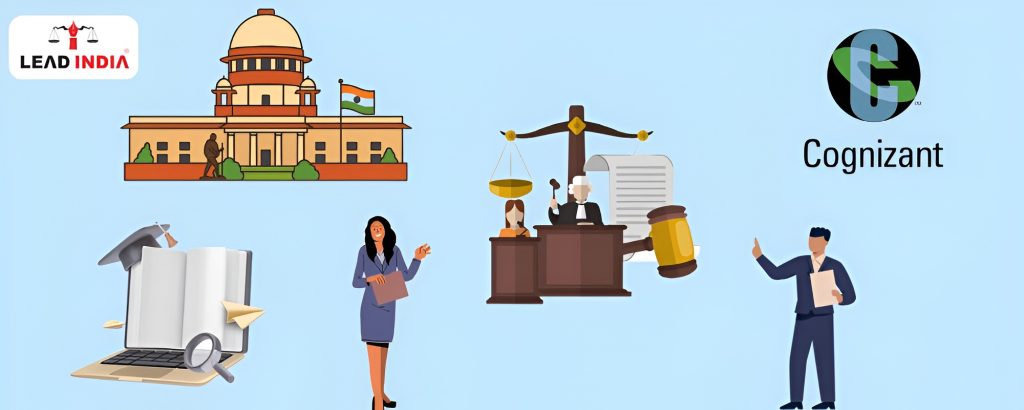
Trademark disputes in India are no longer limited to small businesses. Finance battles arise in intellectual property (IP) arena within even multinational corporations across the global economy. Among such worldwide-starters is the case of Cognizant Technology Solutions versus Atyati Technologies.
The Supreme Court overturned the Bombay High Court judgement in September 2025 that had deprecated Cognizant’s usage of its “honeycomb” shaped logo. This case highlighted the shift in trademark law jurisprudence in India, the manner in which Courts are to balance the need to protect local businesses and yet recognize the international reputation, and the elevating of the profile of IP protection in India.
This article touches upon the Supreme Court judgement, lays out the timeline, explains legal principles and case law, and assesses how this judgement fits in with the bigger picture of Indian trademark law.
Need A Legal Advice
The internet is not a lawyer and neither are you. Talk to a real lawyer about your legal issue
Supreme Court Steps In: Relief for Cognizant, But Not the Final Word
In September 2025, the Supreme Court set aside the Bombay HC’s ban, giving Cognizant temporary relief. But it is only a pause in a longer fight, one that every company in a similar position must prepare for.
How It All Started: A Local Firm vs. a Global Giant
It is advised several small businesses like Atyati. They usually fear that global brands can overshadow them. Atyati felt exactly that when it saw Cognizant’s blue honeycomb logo.
- Atyati’s worry: “Our clients will confuse their services with ours.”
- Cognizant’s defense: “We’re already globally recognized, nobody will mistake us for someone else.”
This is not just legal strategy; it is about identity and survival for smaller firms.
Timeline: The Legal Tug of War
When we map trademark disputes for clients, timelines often look like zigzags. This case is no different:
- March 2024: Cognizant banned by Bombay HC.
- June 2024: Ban lifted by a single judge.
- August 2025: Division bench restores ban.
- September 2025: SC says Cognizant can use logo again, for now.
It shows how quickly fortunes can change in IP litigation.
Inside Cognizant’s Boardroom: The Business Impact We See
When injunctions hit big corporates, brand teams scramble, HR worries about offer letters, and IT rushes to edit websites. For Cognizant, the risk was massive:
- Client contracts needing urgent re-issuance
- Marketing campaigns at risk of collapse
- HR struggling to onboard new hires
- Millions spent on redesigning digital platforms
This is why companies often call us at midnight, because a single court order can shake an entire business model.
What Courts Consider: The Legal Lens We Apply
Whenever we argue IP disputes, these are the questions courts ask:
- Will consumers be confused? (Cadila Health Care Ltd. v. Cadila Pharmaceuticals Ltd., 2001, SC)
- Are there a prima facie case and balance of convenience? (Pernod Ricard v. Karanveer Singh Chhabra, 2025, SC)
- Is the mark well-known globally? (ITC Ltd. v. Punchgini Inc., 2007, SC)
- Was the registration made in bad faith? (Neon Laboratories Ltd. v. Medical Technologies Ltd., 2016, SC)
It is told to clients that, “It’s not only about who designed it first, it’s about who convinces the court on confusion and convenience.”
Bigger Picture: What This Means for Businesses in India
How do we protect ourselves against big brands? This case shows three things clearly:
- Courts do listen to smaller companies, Atyati got multiple wins.
- Multinationals must respect local registrations; reputation alone is not enough.
- India is emerging as a serious IP battleground, where global and local interests collide.
What’s Next: Waiting for the Final Word
For Cognizant, this fight is not over. For Atyati, it is validation that persistence matters. The final ruling will decide if Cognizant keeps its logo in India or goes back to the drawing board.
As a lawyer it is advised to not wait for a courtroom battle, do your IP due diligence upfront.
Key Lessons from This Case
- Interim orders are temporary, do not mistake them for full victories.
- Even global giants can be dragged into Indian courts.
- Local firms should never hesitate to assert IP rights.
- Consumer confusion is the ultimate deciding factor.
- Strong trademark due diligence can save years of litigation.
Conclusion
There are enough IP battles to know that logos are not just designs. They are business identities, and courts treat them seriously.
The Cognizant–Atyati fight is a case study in India’s evolving IP regime. Whether you are a startup or a multinational, the lesson is clear: protect your brand early, and be ready to defend it fiercely.
One can talk to lawyer from Lead India for any kind of legal support. In India, free legal advice online can be obtained at Lead India. Along with receiving free legal advice online, one can also ask questions to the experts online free through Lead India.
FAQs
1. What is the difference between interim relief and final relief in trademark cases?
Interim relief is temporary and given to protect parties until the case concludes. Final relief permanently decides the ownership and rights.
2. Can foreign companies rely on their global brand reputation in Indian courts?
Yes, Indian courts recognize well-known international marks, but local registrations and consumer confusion still play a decisive role.
3. What does “balance of convenience” mean in IP disputes?
It refers to weighing the hardship on both parties. Courts allow interim use if stopping a brand causes more harm than continuing temporarily.


 Talk to a Lawyer