
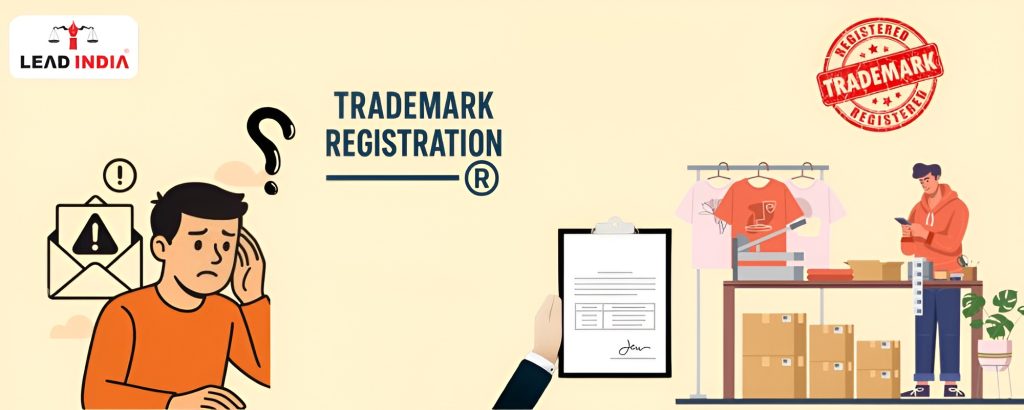
In the fiercely competitive market of India, small businesses and startups are engaged in daily struggles for visibility, reputation, and customer loyalty. While entrepreneurs are immersed with product quality or marketing, one critical step is usually overlooked – trademark registration. Most presume that, only big companies such as Tata or Infosys are in need of trademarks, however, the reality is that a local bakery, boutique, or online seller can suffer great harm if someone is copying or diluting their brand.
A registered trademark helps to protect your business name, logo, or tagline from being used incorrectly, instils confidence with your customers and protects you from copy-cat brands while also providing you with legal remedies should the need arise.
This article explains why trademark registration is essential for small businesses in India, clears common myths, outlines the registration process, and highlights key case laws to show how courts have protected businesses of all sizes.
Need A Legal Advice
The internet is not a lawyer and neither are you. Talk to a real lawyer about your legal issue
What is a Trademark?
Under the Trade Marks Act, 1999, a trademark is any word, symbol, design, slogan, logo, or combination that helps customers identify your goods or services. Think of it as the face of your business.
It is often explained that: “If your logo or brand name appears on a product, your customer should instantly know it’s yours, and not a copy.”
Examples Seen in Practice:
- The Amul girl mascot that everyone associates with dairy products.
- A small bakery was advised in Delhi used a simple cupcake logo that became its strongest asset once registered.
Why Trademark Registration is a Game-Changer for Small Businesses?
1. Protects You from Copycats
For example, one of the clients had a local clothing store and we found out that a shop in the same city was using an almost identical name. The client owned a registered trademark, so we immediately sent a cease-and-desist letter and the issue was resolved without further involvement from the court.
Case Law: In Cadila Health Care Ltd. v Cadila Pharmaceuticals Ltd (2001), the Supreme Court noted that the concept of trademark is based upon the protection of consumers from confusion, and this is true for small businesses as well because they can only afford to sustain reputational harm from confusion for so long, before the damage becomes a huge launchpad to hinder ongoing business activity.
2. Builds Trust and Brand Identity – Beyond Just a Logo
Customers don’t just buy products, they buy trust. In my practice, I’ve seen local restaurants gain repeat customers simply because their logo was familiar and trusted.
Case Law: In ITC Ltd. v. Punchgini Inc. (2007), ITC defended its restaurant brand “Bukhara.” The case showed that even service-based businesses can suffer heavy losses if their brand identity is misused.
3. Saves You from Costly Legal Battles Later
It was once advised to a startup forced to change its name because another company registered it first. They lost customers and had to reprint all packaging. The cost of rebranding was far more than the trademark fee.
Case Law: In Milmet Oftho Industries v. Allergan Inc. (2004), the court ruled in favour of the prior trademark holder. The judgment warns small businesses that delay in registration can cost them their identity.
4. Increases Business Value: What Investors Ask Me
When startups approach me before funding rounds, one of the first questions investors ask is: “Do you have a registered trademark?” It signals professionalism and long-term planning.
Case Law: In Yahoo! Inc. v. Akash Arora (1999), the Delhi High Court recognized domain names as trademarks. This highlighted that even digital assets add value when protected.
5. Expands Protection Beyond Borders
Through the Madrid Protocol, even small Indian brands can protect themselves internationally. One of the clients, a small T-shirt seller on Amazon, registered their mark and later stopped a foreign seller from copying their designs.
6. Strengthens Your Marketing and Online Presence
It is seen that the businesses use trademarks to boost not just legal safety but also digital visibility. Consumers build trust in a logo through its repeated exposure in advertisements, packaging, or on web pages.
Case Law: In Bata India Ltd. v. Pyare Lal & Co. (1985), the Delhi High Court restrained a local shoe manufacturer from using a deceptively similar mark. This case illustrates how valuable a trademark can be to marketing power.
7. Quick and Effective Enforcement
Registered trademarks make enforcement simple. With a certificate, courts usually favour your side.
Case Law: In Daimler Benz v. Hybo Hindustan (1994), the Delhi High Court stopped misuse of “Benz” by a local underwear company. The ruling was swift because Mercedes-Benz already had a registered mark.
Common Misconceptions that are Heard from Clients
- “I’m too small for a trademark.” Even home-based sellers face copycats.
- “It’s too expensive.” Filing costs (₹4,500-₹9,000) are nothing compared to rebranding.
- “I already use the name.” Usage alone doesn’t give full legal rights.
- “I’ll register later.” Dangerous. It is seen that the cases where competitors registered first and forced genuine businesses to change their names.
Step-by-Step: How to Register a Trademark in India?
Here’s the process to guide most clients through:
- Trademark Search: Check existing marks on IP India’s website.
- Application Filing: File Form TM-A with fees.
- Examination: The office checks for objections.
- Publication: If accepted, published in the Trademarks Journal.
- Opposition Period: Four months for objections.
- Registration: If unopposed, the certificate is issued.
Practical Tip: You can start using the ™ symbol right after filing. Once registered, you switch to ®.
Conclusion
From bakeries to tech startups, it is observed that businesses regret not registering early. Courts in India, from Cadila Health Care to Yahoo! Inc., have reinforced that trademarks are not a luxury, they’re a necessity.
If you are running a small business, you should register your trademark today. It protects your name, builds consumer trust, and creates long-term value for your brand.
One can talk to lawyer from Lead India for any kind of legal support. In India, free legal advice online can be obtained at Lead India. Along with receiving free legal advice online, one can also ask questions to the experts online free through Lead India.
FAQs
1. What documents do you need to register a trademark in India?
You will have to provide proof of identity, proof of address, proof of business registration (like GST or incorporation certificate), and provide the logo or brand name in or as a jpeg file.
2. Can two businesses have the same trademark in India?
No, unless they are in completely different industries and not likely to cause consumer confusion. Similar marks in the same class can be rejected.
3. What happens if my trademark application is opposed?
You can file a counter-statement and defend your application. The Registrar will decide the matter after hearing both parties.


 Talk to a Lawyer