
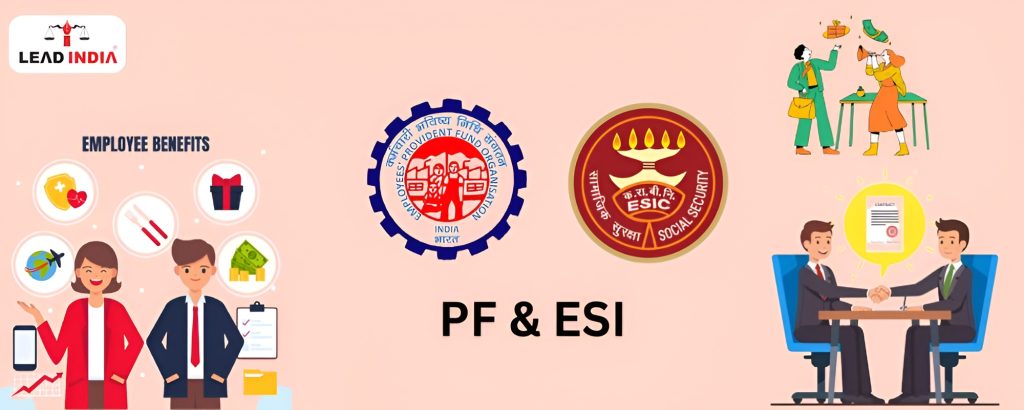
Any and every monthly payslip in the country observes deductions towards Provident Fund (PF) and Employees’ State Insurance (ESI) for any salaried employee. These deductions therefore offer future security to the employees PF for retirement and ESI for medical and social security. PF withdrawals, transfers from one account to another, and other such requests by an employee for his/her own benefit under ESI are mostly anything but smooth processes.
Since India’s independence, major aspects of the labour legislation framework have been mainly covered by acts such as the Employees’ Provident Funds and Miscellaneous Provisions Act, 1952 (EPF Act) and the Employees’ State Insurance Act, 1948 (ESI Act). Later on, various social security legislations were added, conferring further benefits such as gratuity, maternity leave, and bonus. Despite these protective measures, however, the challenges of jurisdiction disputes, recalcitrance, delays, undue interference, and hide-and-seek acts with overlapping laws continue to plague employees and employers alike.
This article breaks down the key issues with PF, ESI, and employee benefits in India, supported by Supreme Court case laws, and explains what employees can do when problems arise.
Need A Legal Advice
The internet is not a lawyer and neither are you. Talk to a real lawyer about your legal issue
Provident Fund (PF): Why Do Employees Struggle Despite Regular Deductions?
Are Contract and Outsourced Workers Really Covered?
Many companies exclude contract workers from PF. But the Supreme Court in Regional Provident Fund Commissioner v. Vivekananda Vidyamandir (2019) made it clear: allowances that are universally paid must be included in PF contributions.
From Experience: Employees often approach me saying their salary slip shows “allowances” but no PF deduction. This is usually a deliberate tactic by employers.
Why Do PF Transfers and Withdrawals Take Forever?
Even after UAN digitization, employees complain of months-long delays in PF transfers. Some clients have waited six to eight months for money that legally belongs to them.
Practical Step: If your PF transfer is stuck, raise a complaint on the EPFiGMS portal. It usually speeds up the process.
What Happens in Companies with Private PF Trusts?
Employees of exempted establishments often do not realize their PF is managed by private trusts. Mismanagement in such trusts has left employees waiting for their savings.
Employees’ State Insurance (ESI): Why Do Employees Avoid ESI Hospitals?
Who Is Actually Covered?
IT employees, casual workers, and even home-based workers fall under ESI, as confirmed in Coir Board v. Indira Devi (1998). Yet, many employers never register eligible staff.
From Experience: One client discovered she was not registered under ESI even after two years of deductions from her salary. She only realized this when she needed maternity benefits.
Why Is the Healthcare Quality So Poor?
Most employees dread going to ESI hospitals. Long queues, lack of doctors, and outdated facilities often force them to spend extra at private clinics.
Practical Step: In emergencies, employees can get treated in private hospitals and later claim reimbursement from ESIC with proper documentation.
Contribution Burden and Non-Compliance
SMEs often struggle with contributions. At the same time, some employers avoid obligations by misclassifying wages or failing to register workers.
Case Law: ESIC v. Hotel Kalpaka International (1993): Casual hotel workers were held eligible for ESI benefits.
Wage Ceiling Confusion
Frequent changes in the wage ceiling cause disputes when employees cross the limit mid-year. Many employees are unsure about their contribution status in such cases.
Exclusion of Gig and Unorganized Workers
India’s workforce is largely unorganized. Gig workers, delivery staff, and freelancers remain outside ESI coverage, making this one of the biggest gaps in social security.
Other Benefits: Where Do Employees Get Stuck?
Gratuity Disputes: Can Employers Deny It Easily?
No. The Supreme Court in Union Bank of India v. C.G. Ajay Babu (2018) ruled gratuity can only be forfeited in cases of moral turpitude.
From Experience: Employers sometimes deny gratuity to employees who resigned after four years and 240 days of service. Courts have clarified that this counts as five years of service.
Maternity Benefits: Why Are Women Still Discriminated Against?
Even for the Maternity Benefit Act, 1961, there are many small companies that avoid hiring women for fear of incurring costs in this regard. In the case of Municipal Corporation of Delhi v. Female Workers (2000), maternity leave was granted to daily wage earners, but the enforcement of this ruling is minimal, if one can say so.
Bonus and Leave Issues
Employers underreport profits to avoid paying bonus and often fail to comply with statutory leave entitlements.
Labour Codes: Will They Actually Fix These Problems?
The Code on Social Security, 2020 attempts to combine laws on PF, ESI, gratuity, and maternity benefits into one. However, until now, it has not come into force. It has not been implemented.
From Experience: Quite a few HR managers themselves do not know how the new codes are going to work. Until these are implemented, employees remain with old and unresolved issues.
What Do Courts Say About Employee Benefits?
Courts generally favour employees and interpret social welfare laws liberally:
- Vivekananda Vidyamandir (2019): Clarified PF wage structure.
- Indira Devi (1998): Extended ESI to home-based workers.
- Female Workers (2000): Granted maternity benefits to daily wagers.
- Ajay Babu (2018): Protected gratuity rights.
The Way Forward: What Employees and Employers Can Do?
- Employees should regularly check their PF deposits on the EPFO portal.
- Employers must view PF and ESI as investments, not burdens.
- The government must improve ESI hospitals and create awareness campaigns.
- Gig workers and freelancers should be included in PF and ESI benefits.
From Experience: Employees who track their PF accounts regularly face fewer disputes. Those who ignore them until resignation often face the longest delays.
Conclusion
PF, ESI, and other employee benefits are not favours from employers; they are legal rights. If you face delays or denial, don’t rely only on HR. File a complaint on EPFO or ESIC portals, and if unresolved, seek legal advice. Courts in India have consistently upheld employee rights, but action starts with the employee.
Protecting PF, ESI, and other benefits is not just a statutory requirement. It is essential for financial security, workforce stability, and building a fair workplace in India.
One can talk to lawyer from Lead India for any kind of legal support. In India, free legal advice online can be obtained at Lead India. Along with receiving free legal advice online, one can also ask questions to the experts online free through Lead India.
FAQs
1. What are the common problems employees face with PF in India?
Employees often face issues such as delays in PF transfers, unclaimed balances, difficulty in activating UAN, and employers splitting salary into allowances to reduce PF contributions.
2. Can contract workers and outsourced employees get ESI benefits?
Yes. The Supreme Court has clarified that contract and even home-based workers can be covered under ESI if they are connected to an establishment. Employers are legally bound to register them.
3. What should I do if the ESI hospital does not provide proper treatment?
In emergencies, employees can avail treatment at private hospitals and later claim reimbursement from ESIC. You should retain hospital bills and submit them to your local ESIC office.


 Talk to a Lawyer